Physical Computing

Weekly Activity Template

Fernanda Lopez


Module 1


Activity Research

For activity one we learned how to connect the Arduino One, code examples and how to link it with Protopie connect.

Activity 1
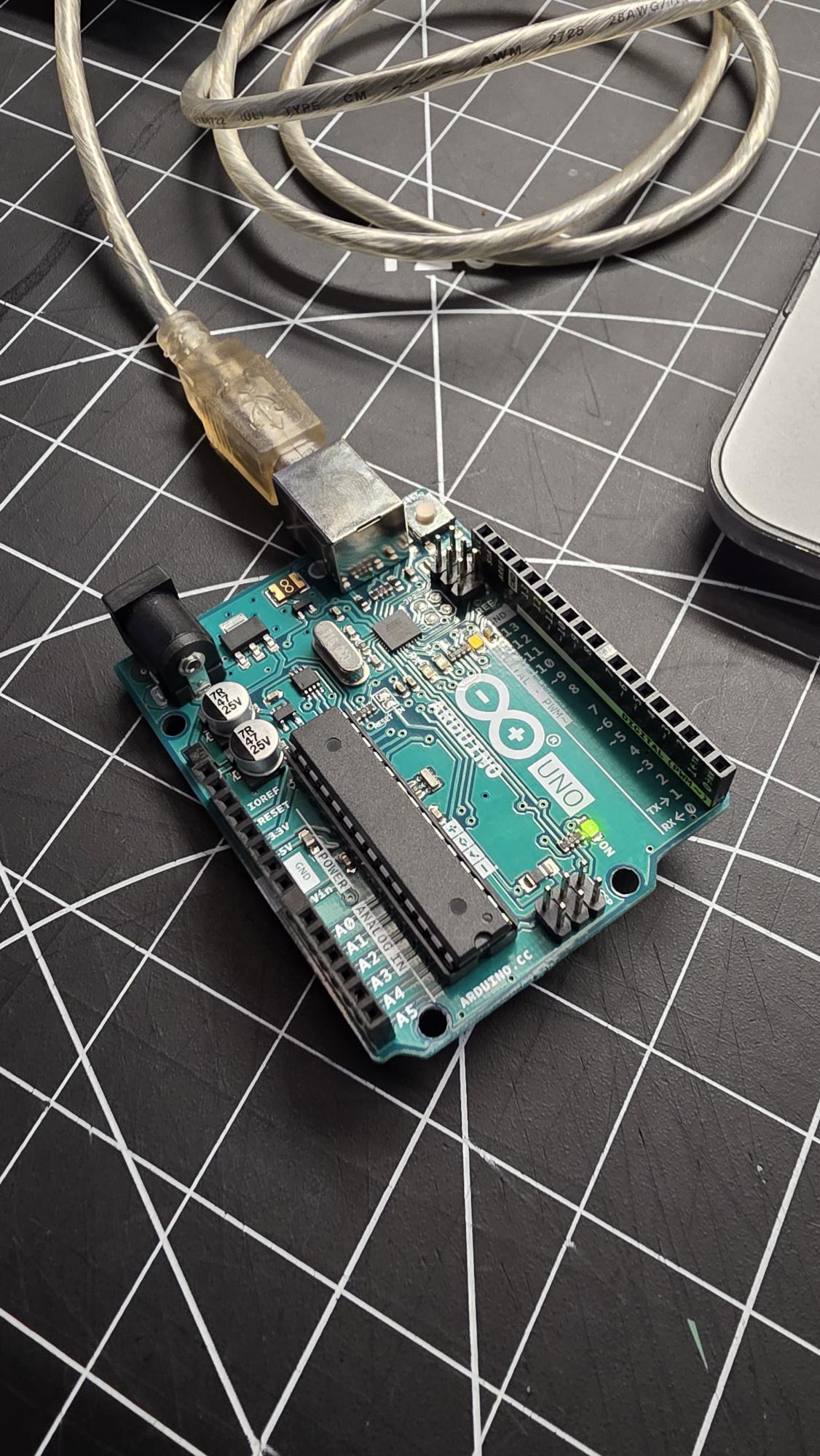
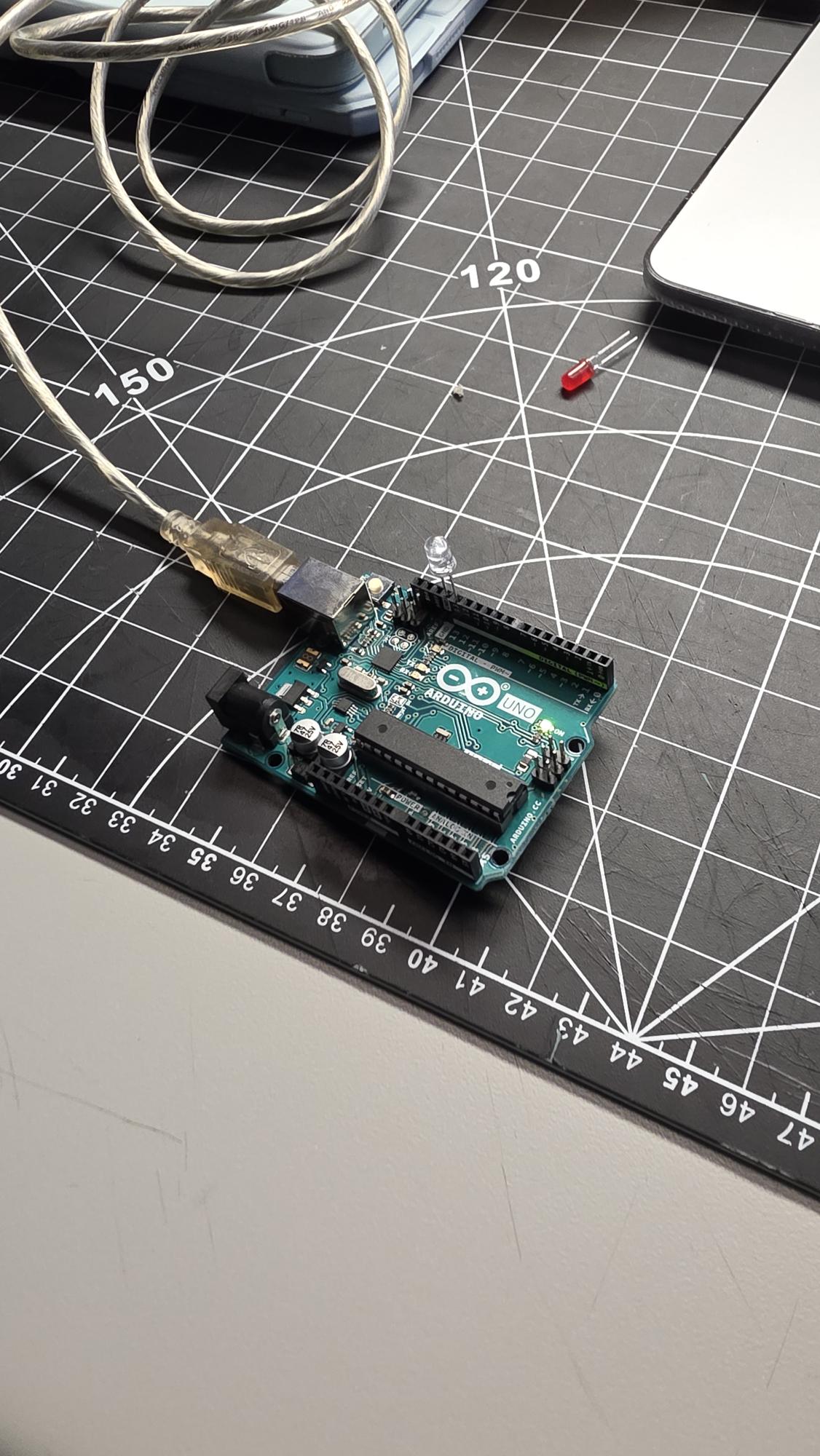
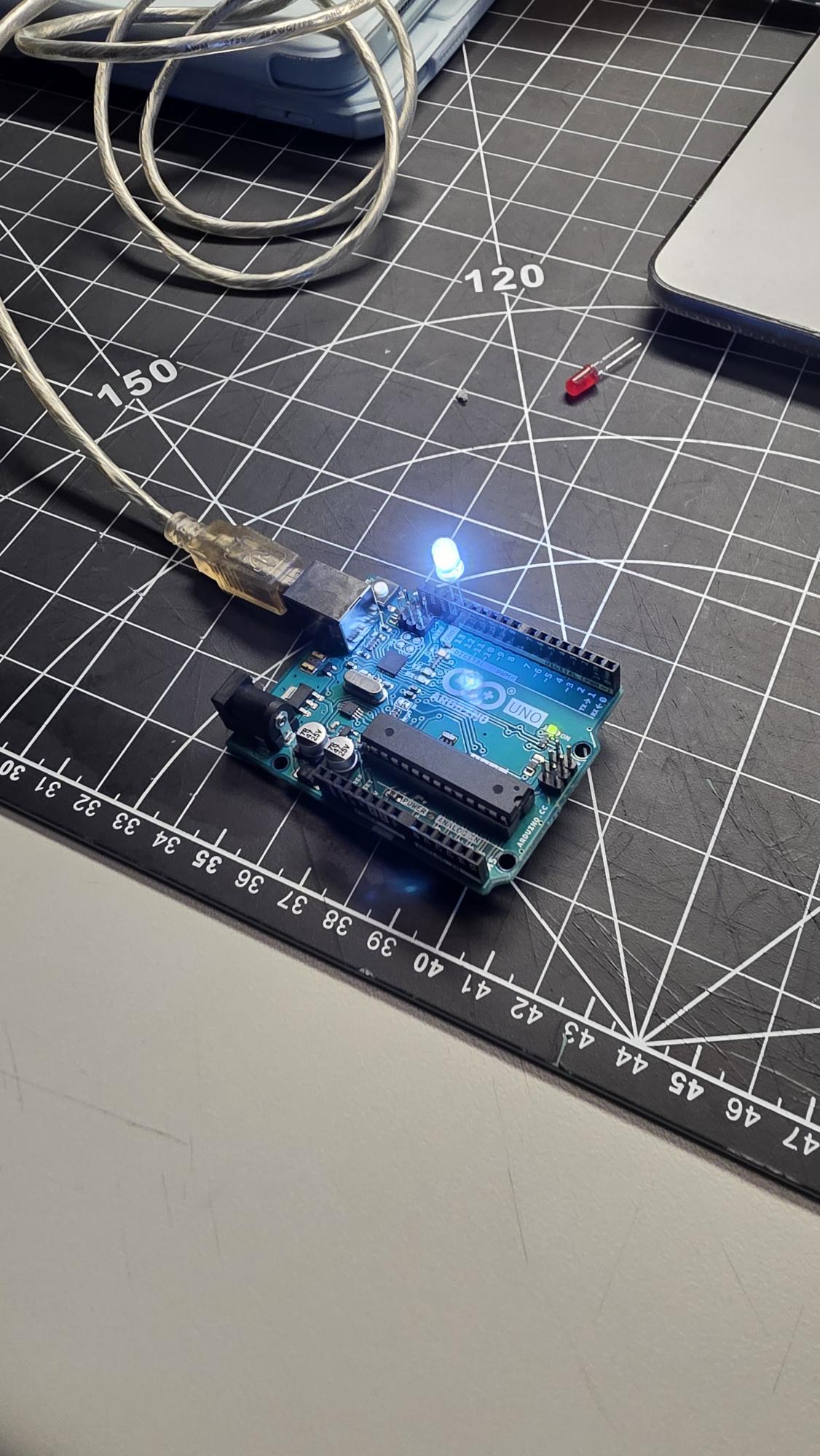
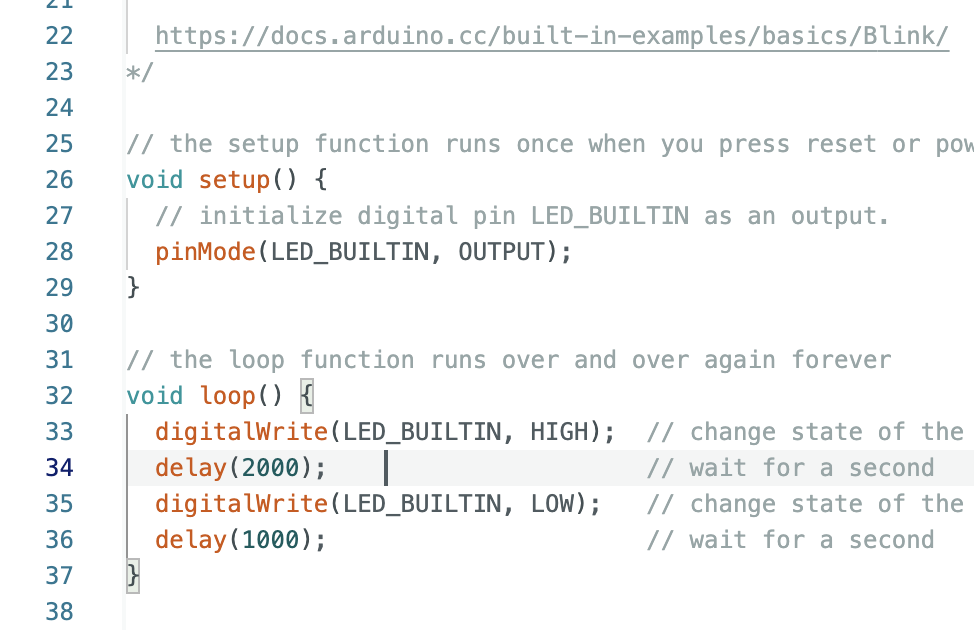
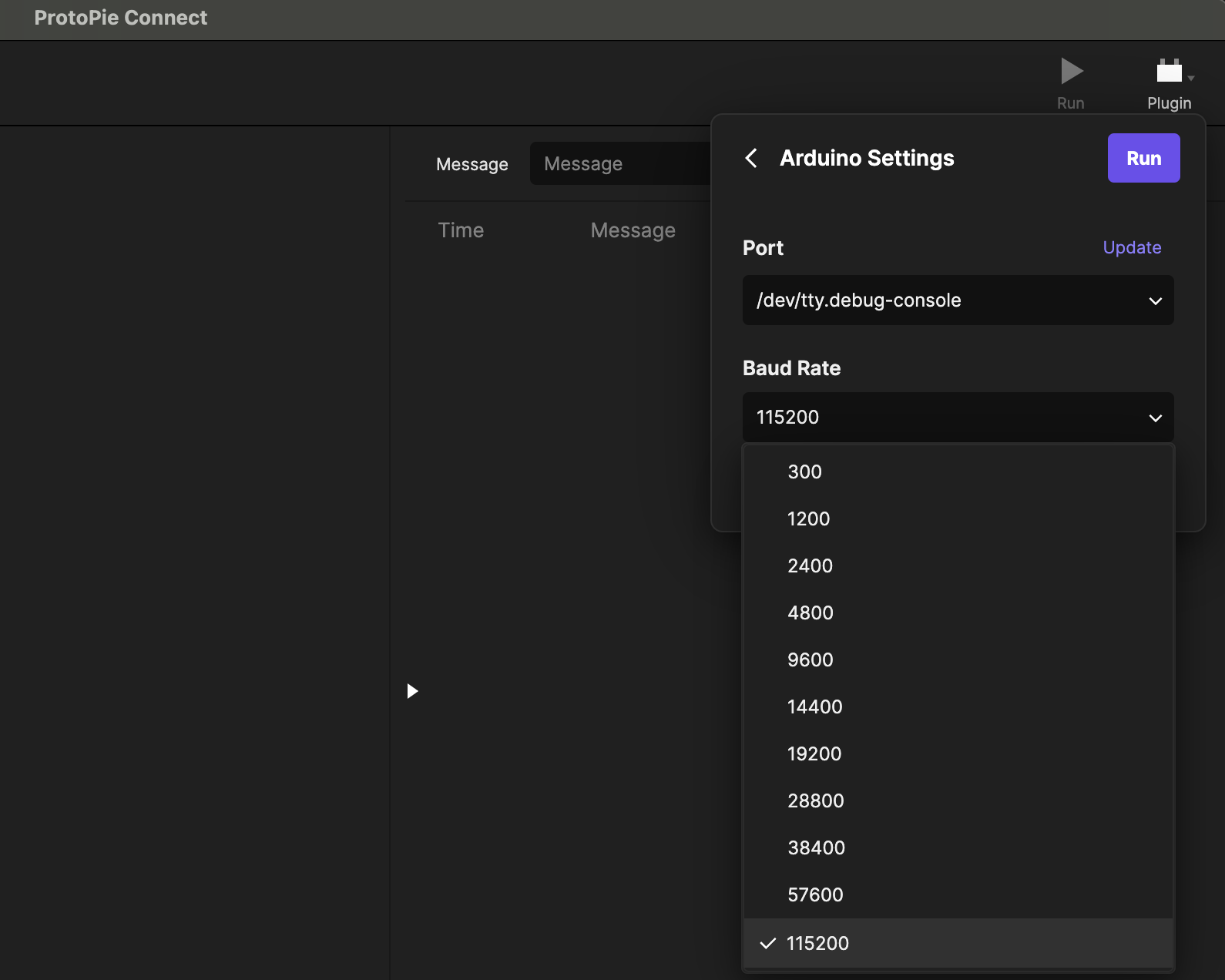
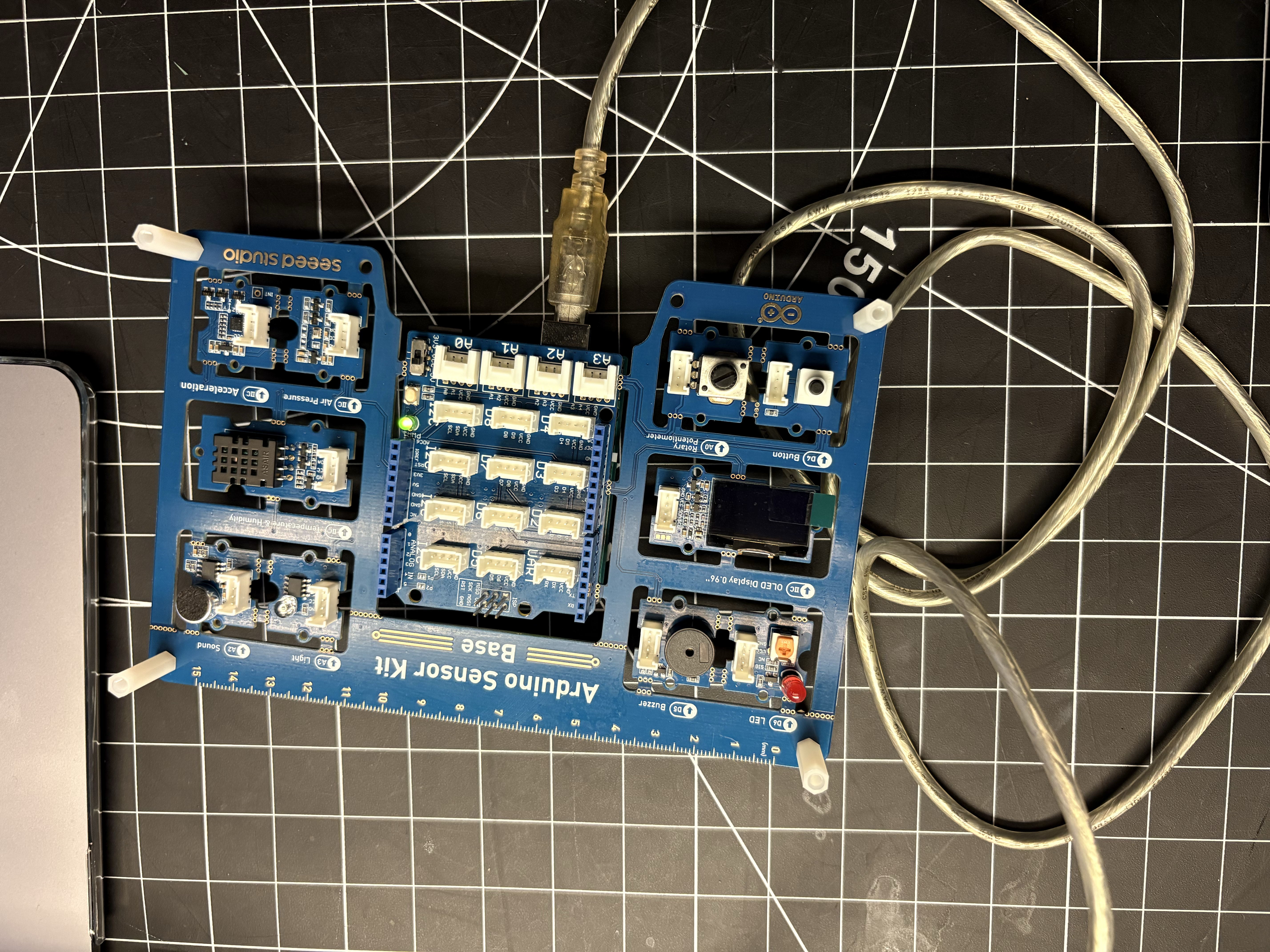
This picture is when we first connected the Arduino to our computers and downloaded the software to start coding. After connecting the Arduino we used the code examples to run the blinking code so the light on the arduino would turn on Next, we got some LED lights and put them on the 13 (positive leg) and the GND (ground leg) spaces to run the same blinking code Since the code and LED light worked properly, we started altering the code (minor things) like adding or reducing the time intervals that the light blinked Finally, we saw Steve connect the arduino to Protopie connect and run a humidity-meter sensor code.

Activity 2

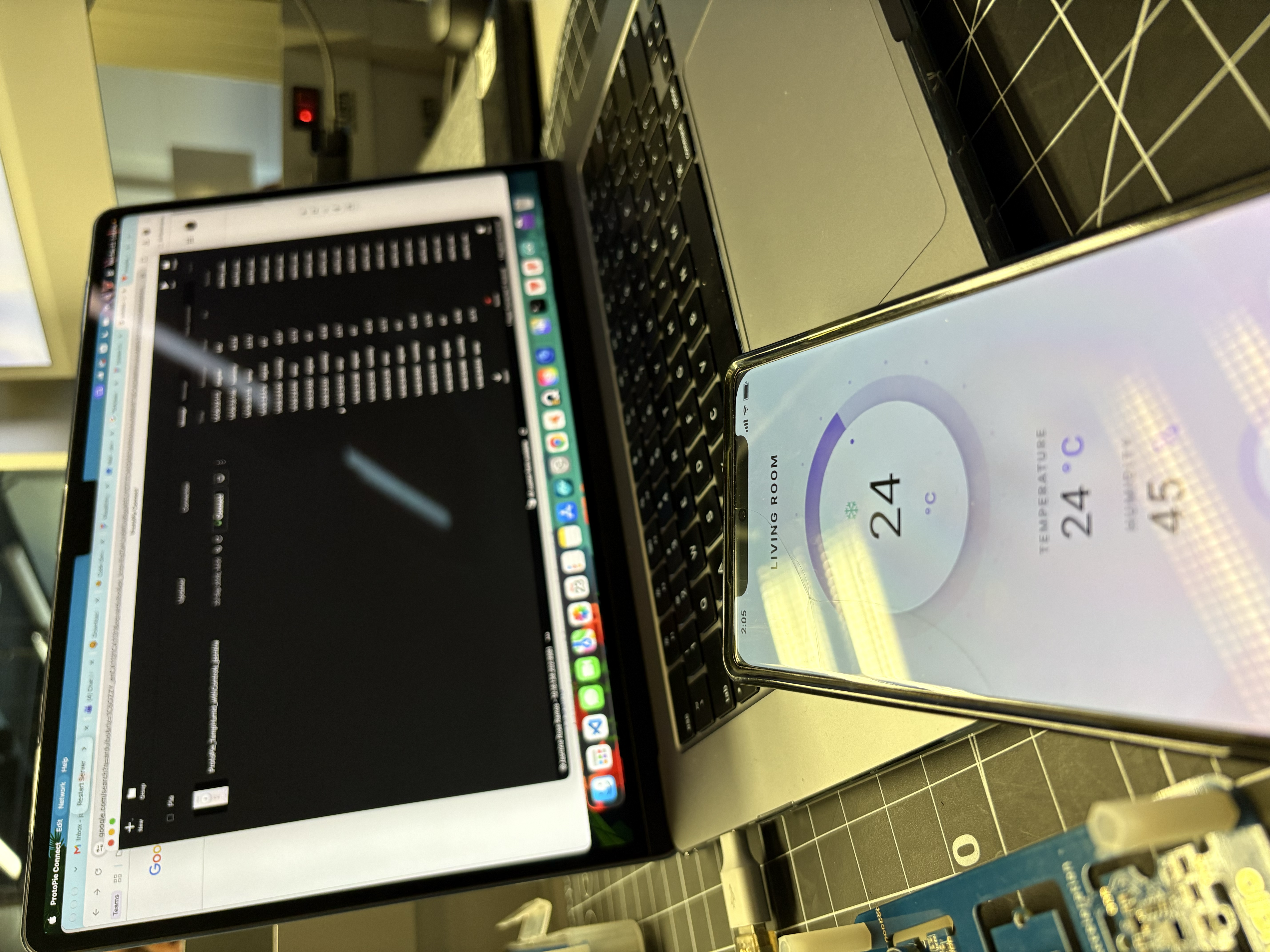
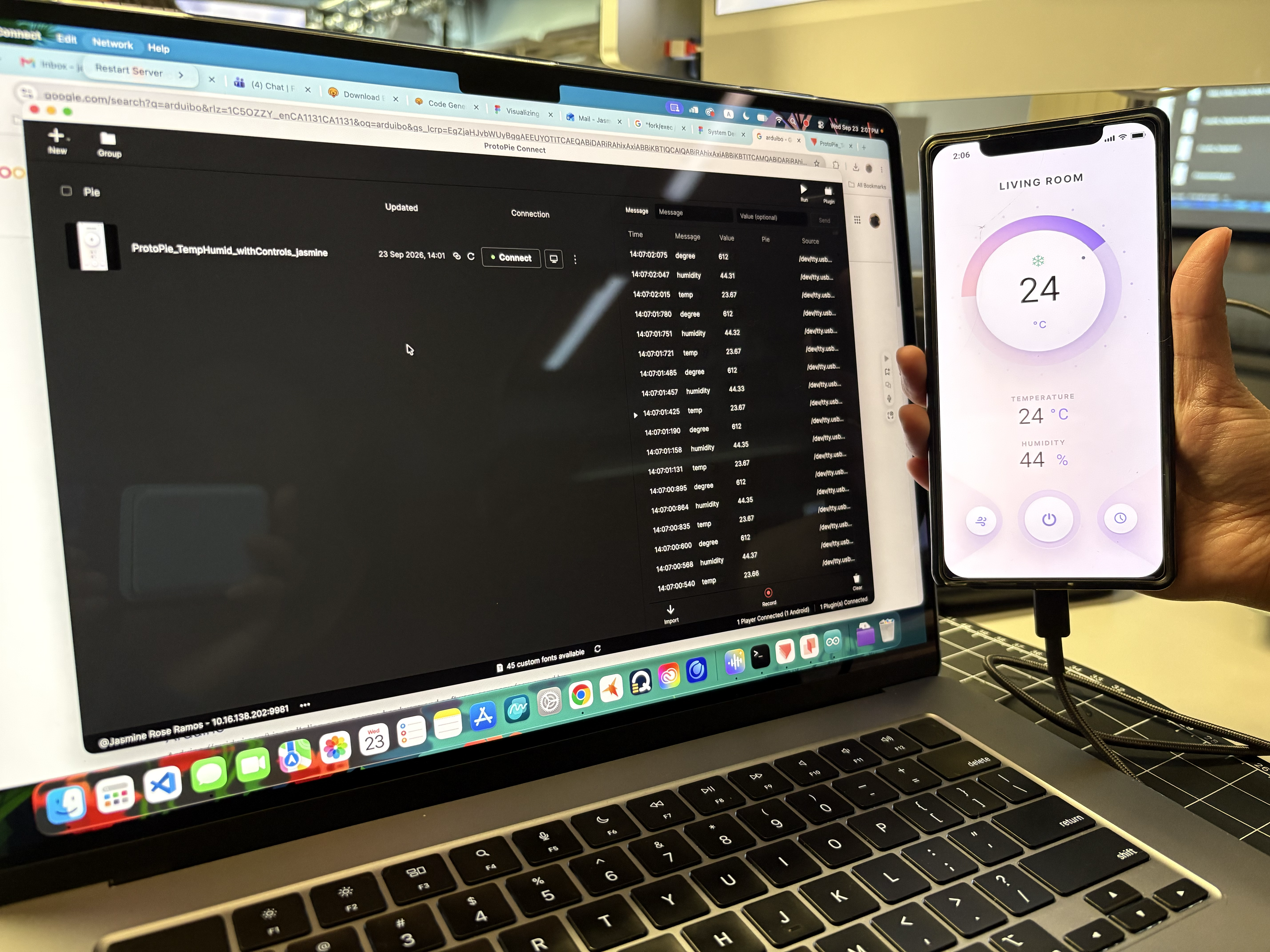
Arduino board connected to the computer and the code example running Connected the Arduino humidity sensor to protopie interface The Protopie interface showing the humidity sensor and the code example running after someone breathes on the sensor Screenshot of the humidity levels on the Arduino code Protopie interface before connecting it to the Arduino humidity sensor

Activity 3

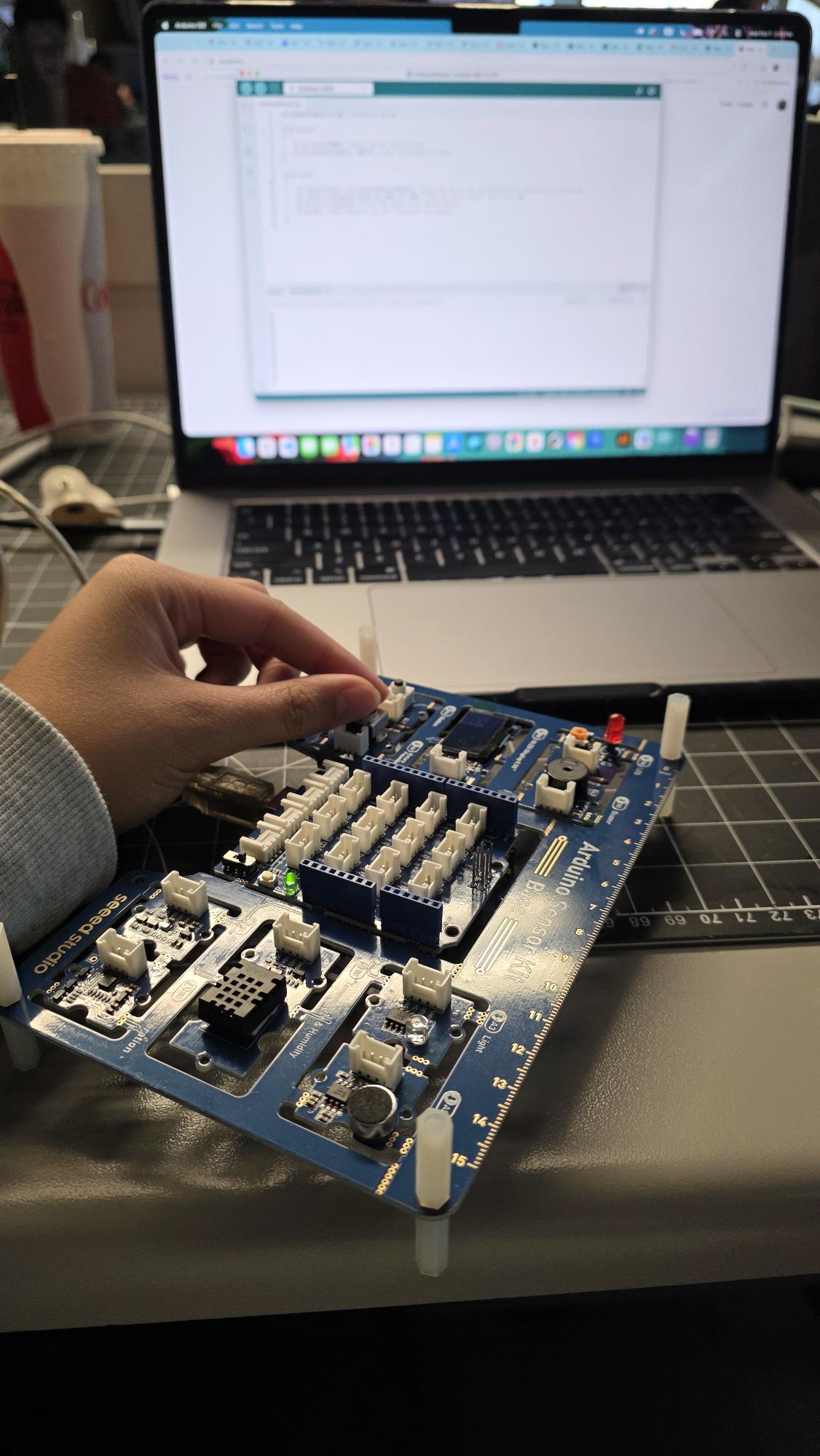
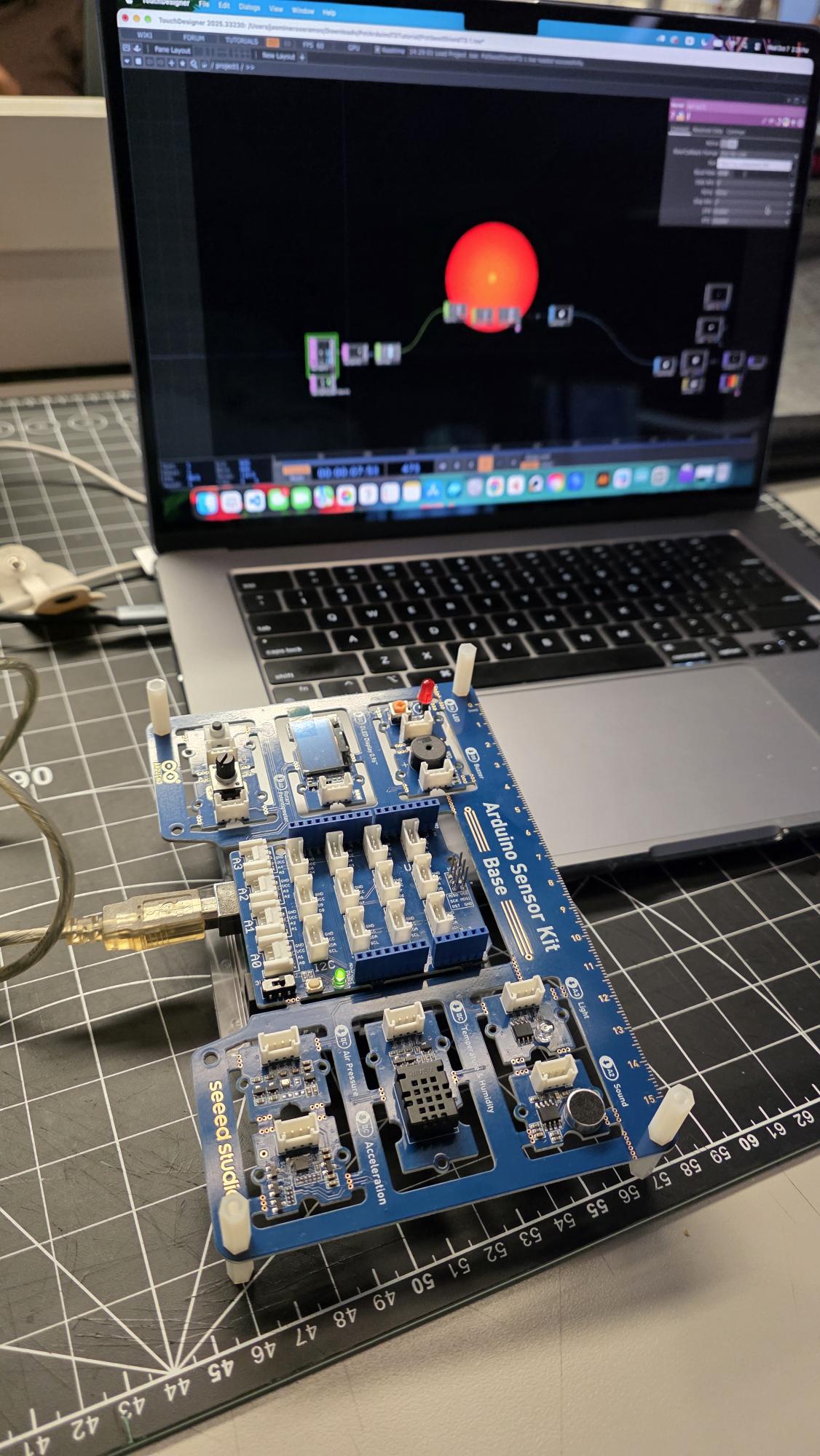
Potentiometer, code in the Arduino page Settings on Touch Designer to connect the potentiometer to Tourch Designer Jasmine turning the potetiometer to check the values on the Arduino code Close-up of the Arduino

Research Activity


Consumer Trend Research

For this project we had to do trend research to inform the direction of the project to prevent it from becoming obsolete quickly. Some of the topic I explored include: consumer trends and behaviours around sustainability, luxury, and technology in everyday life.
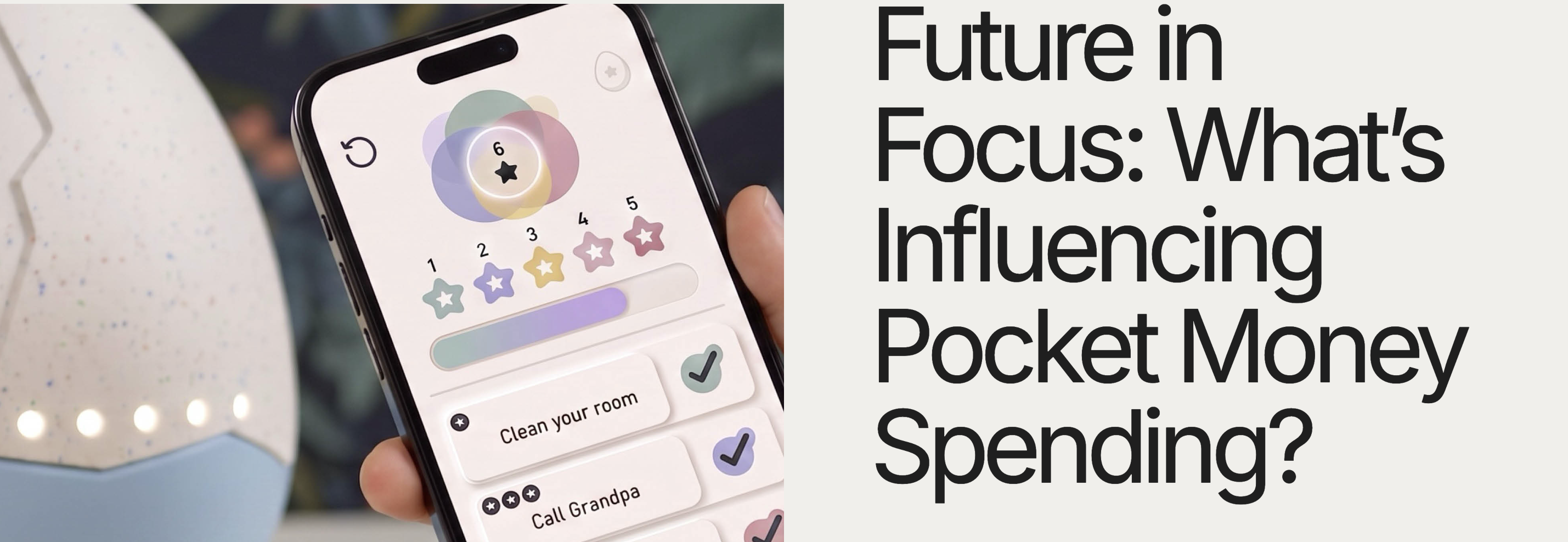

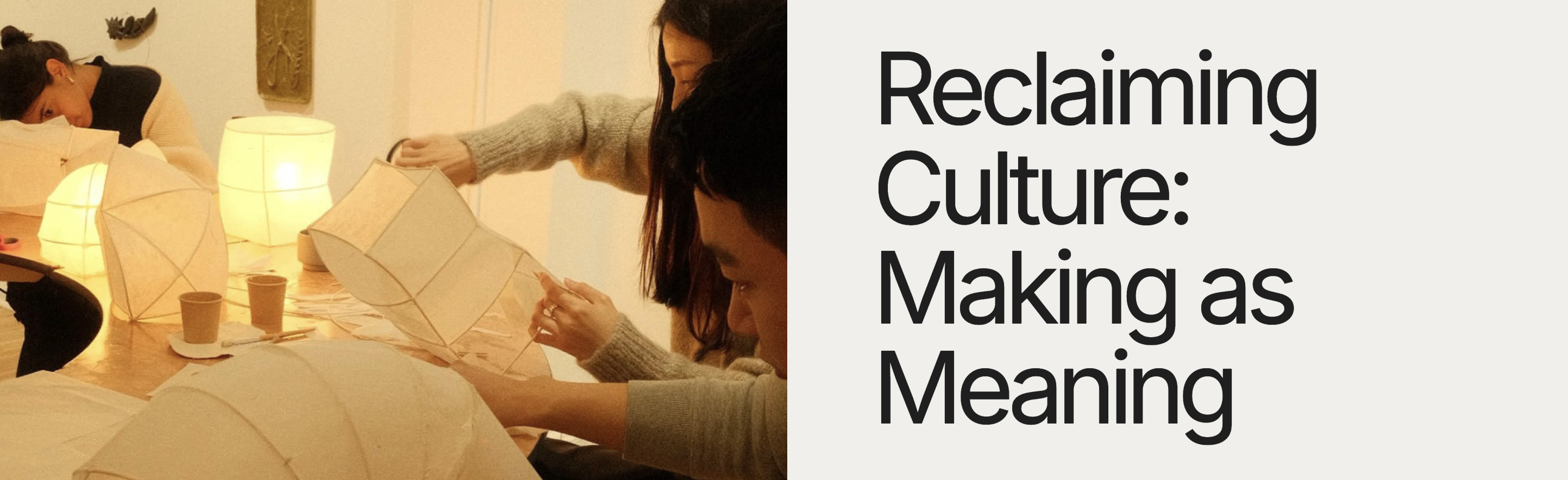
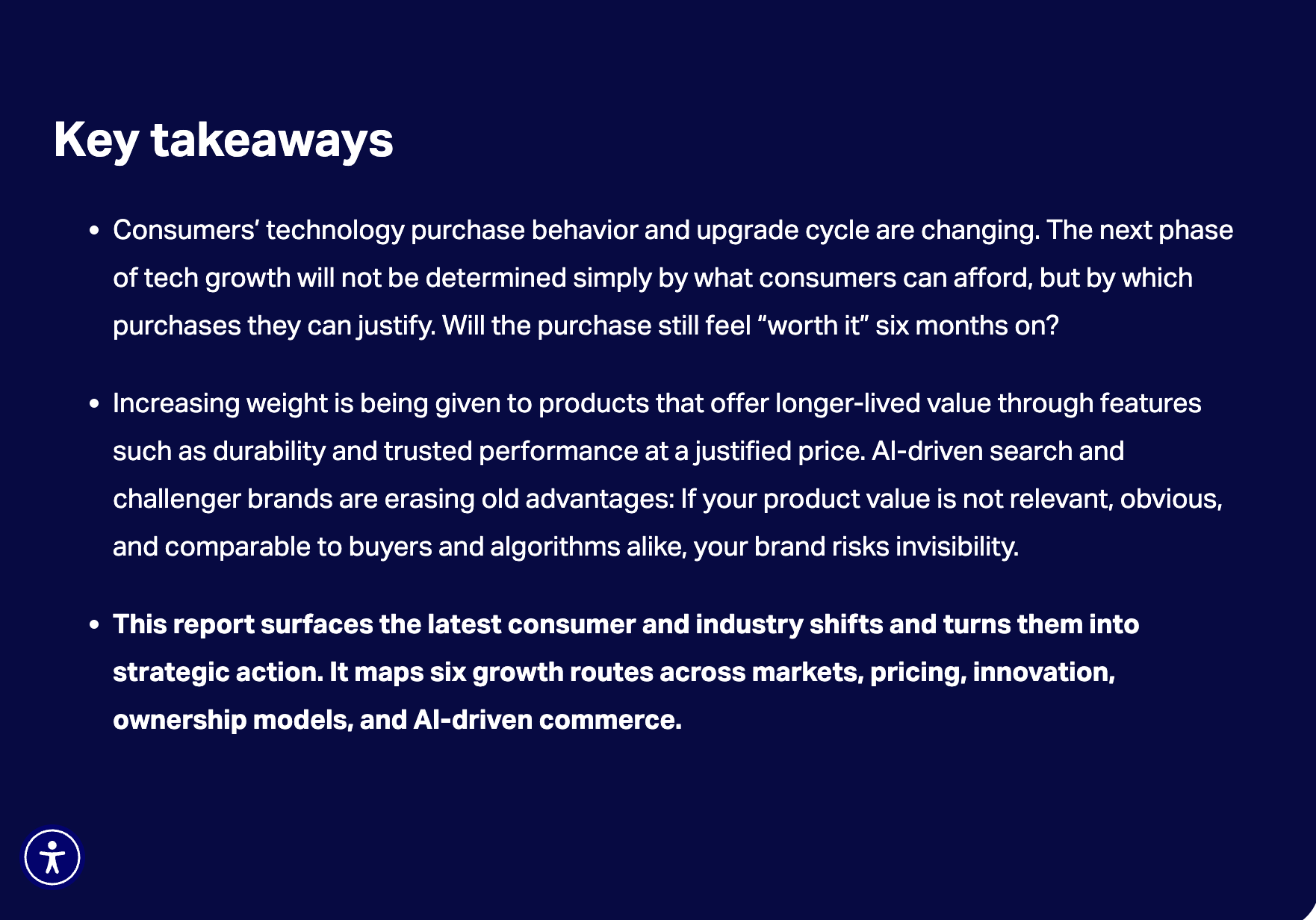
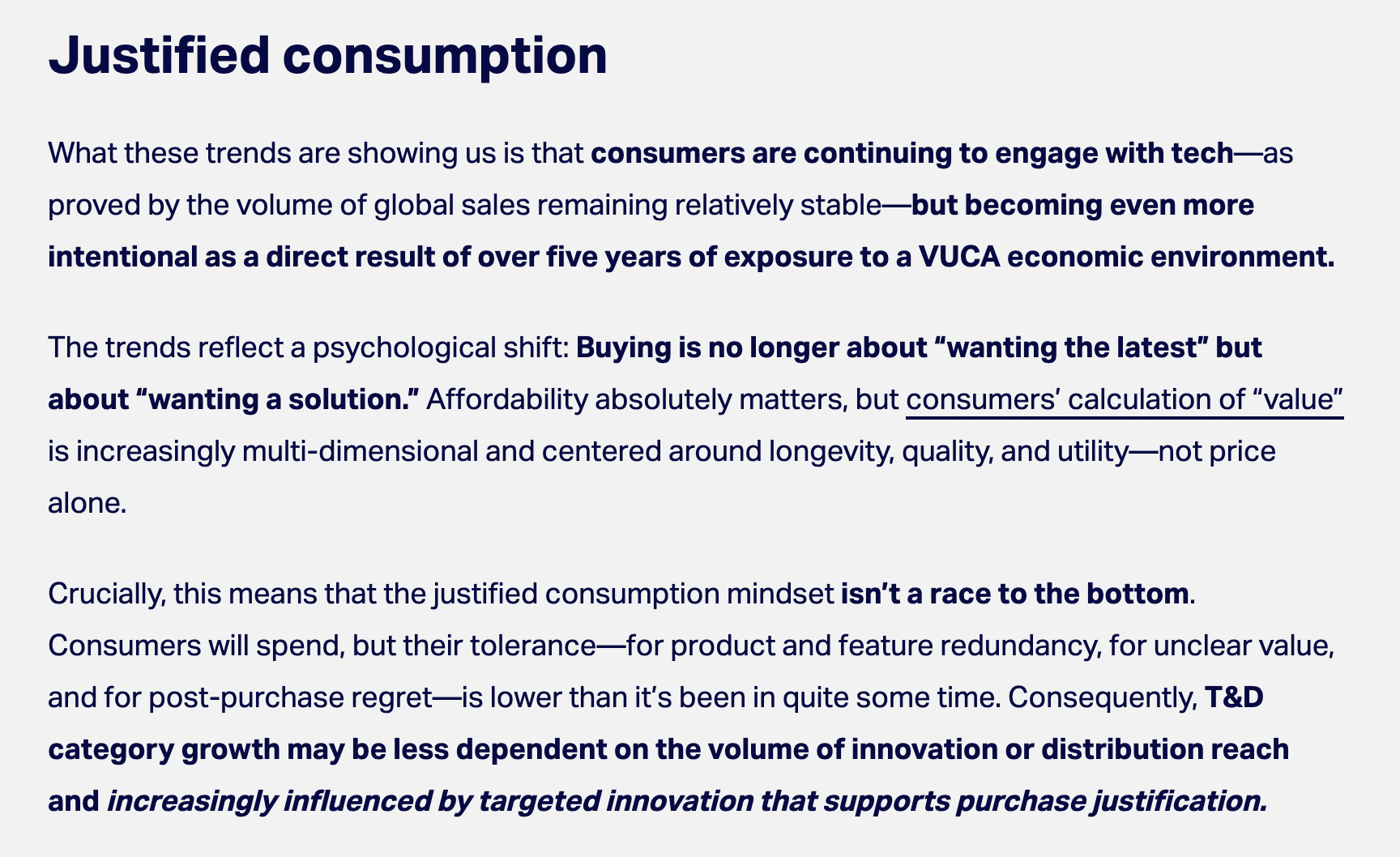
This article talks about trendy products what parents are buying for their kids and how they are deciding what products to buy like: whether it will be educational or safe for them, nostalgia, moment-capturing, sustainability-driven or with the purpose of getting kids away from screens. This article is about the growing trend of using scents as part of a narrative for brands, that can evoke emotions and memories in the audience. Fragrances are becoming part of daily rituals and a form of self-expression. This points brands towards creating more immersive experiences, and using scent as part of storytelling. This article is about people seeking handmade products as push back against AI and trends, which are equated with sameness. People are looking for unique products as a signifyer of taste. Also, the process of creating is re-gaining importance in contrast of the fast and generic AI generation. This last article is about trends in hobbies and how that relates could affect people's homes and how and where they spend their time. Romance, reading and hands-on hobbies that keep people away from the screen are gaining popularity as more people are aware of the negative effects of a lot of screen time. A summary of consumer behaviours that has been noted through the previous four articles.

Personas Research

Who is affected by screen addiction? What are their needs and pain points? What are they already doing and what are they looking for to reduce their screen time? How does screen addiction manifest in their lives? These are some of the questions I explored through personas research.
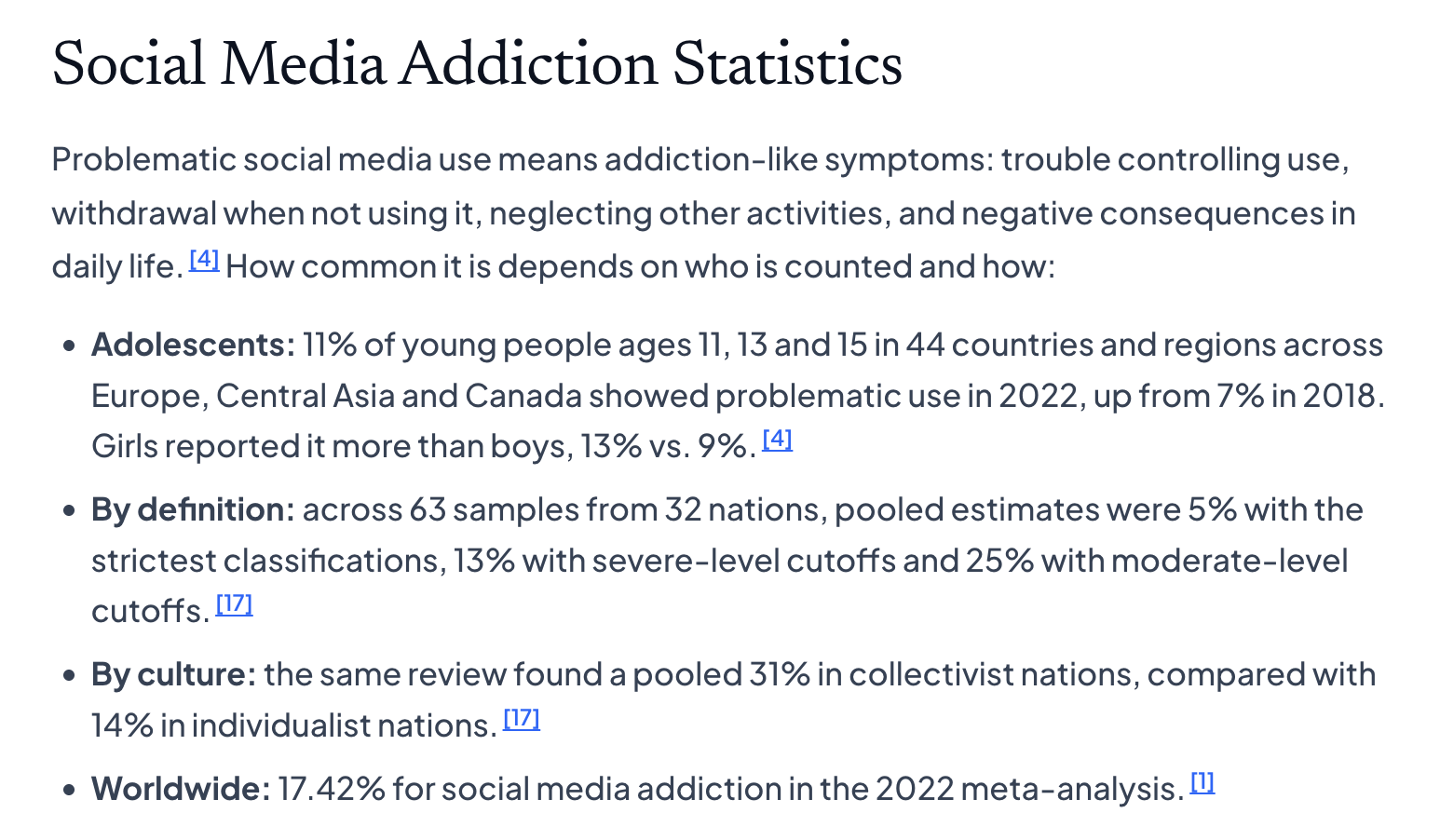
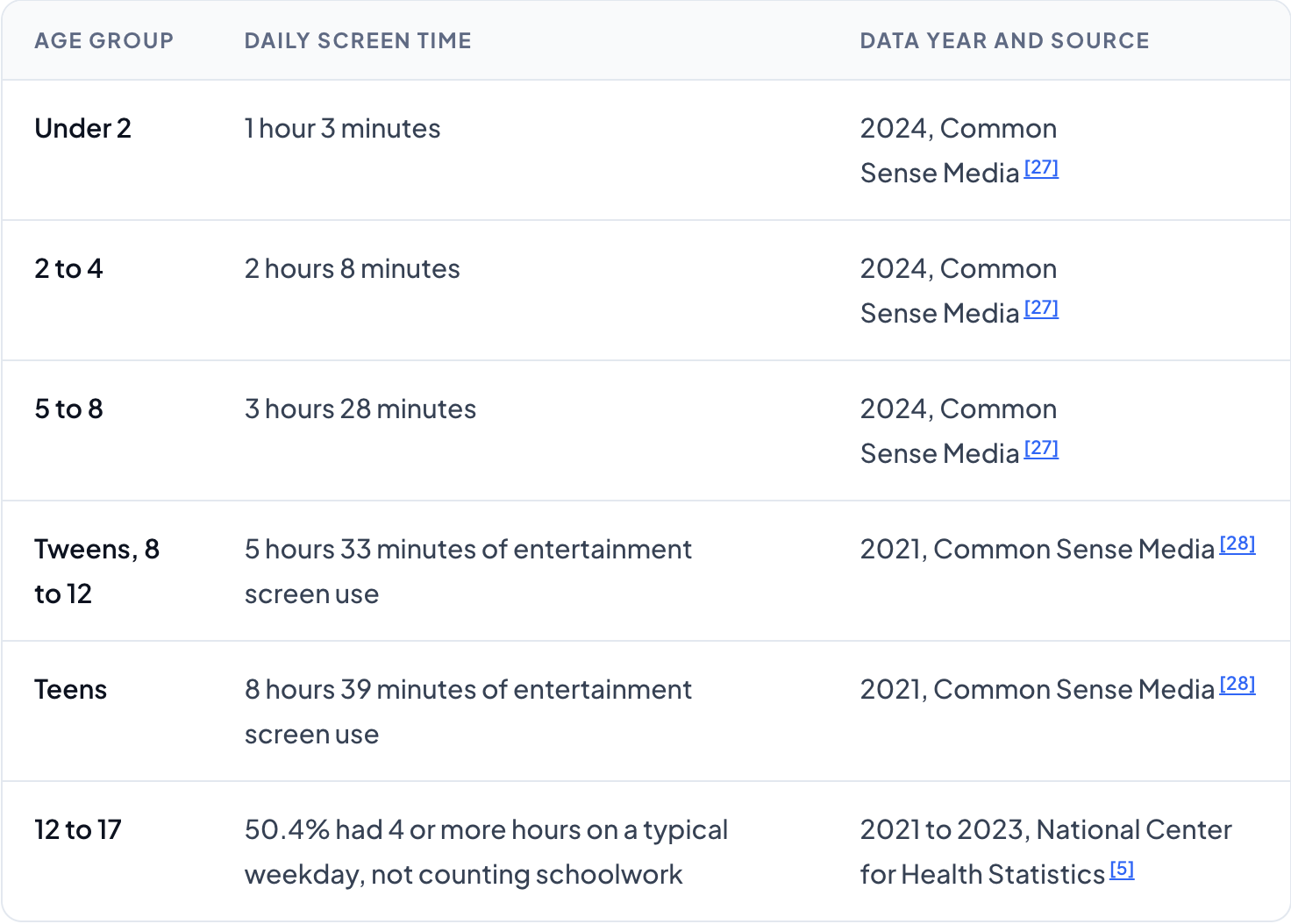
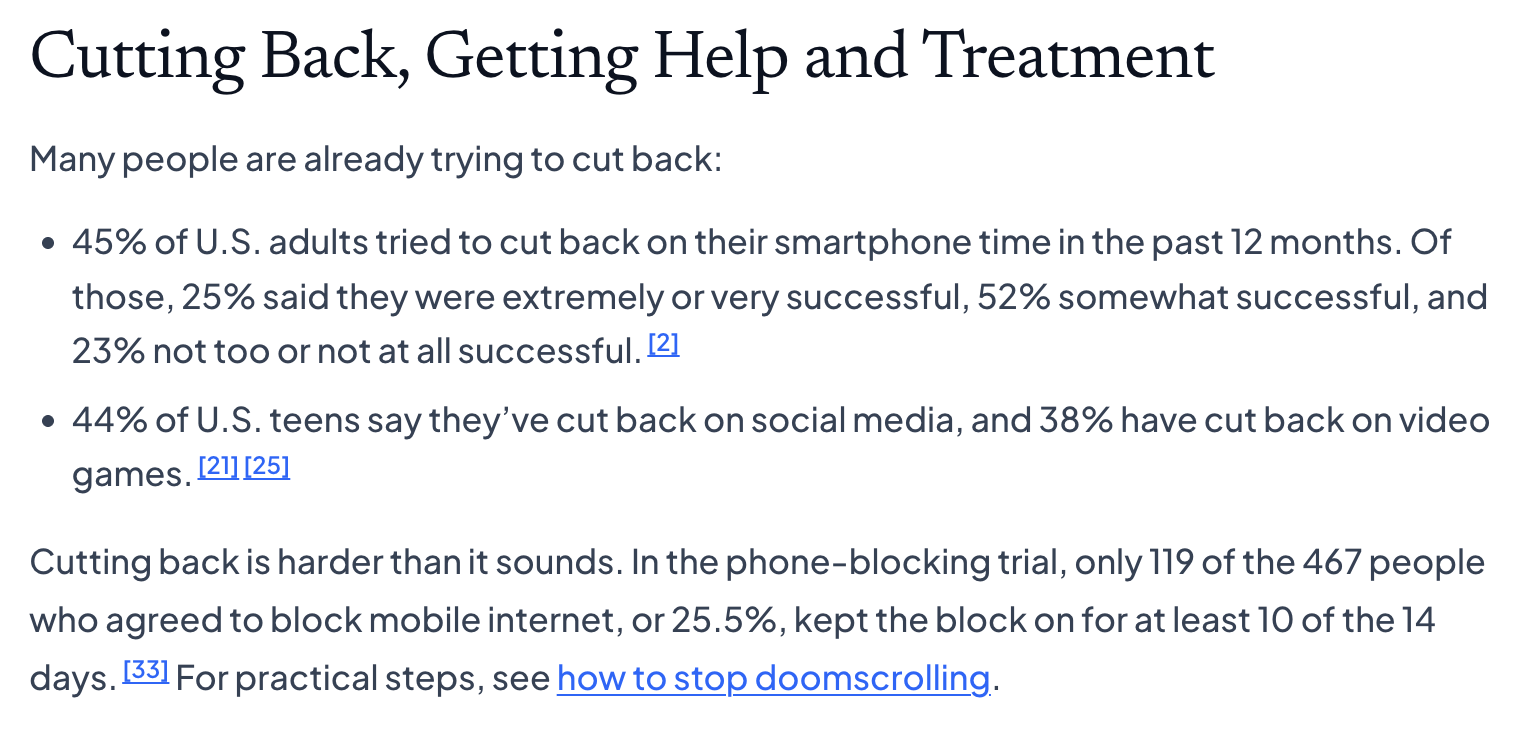
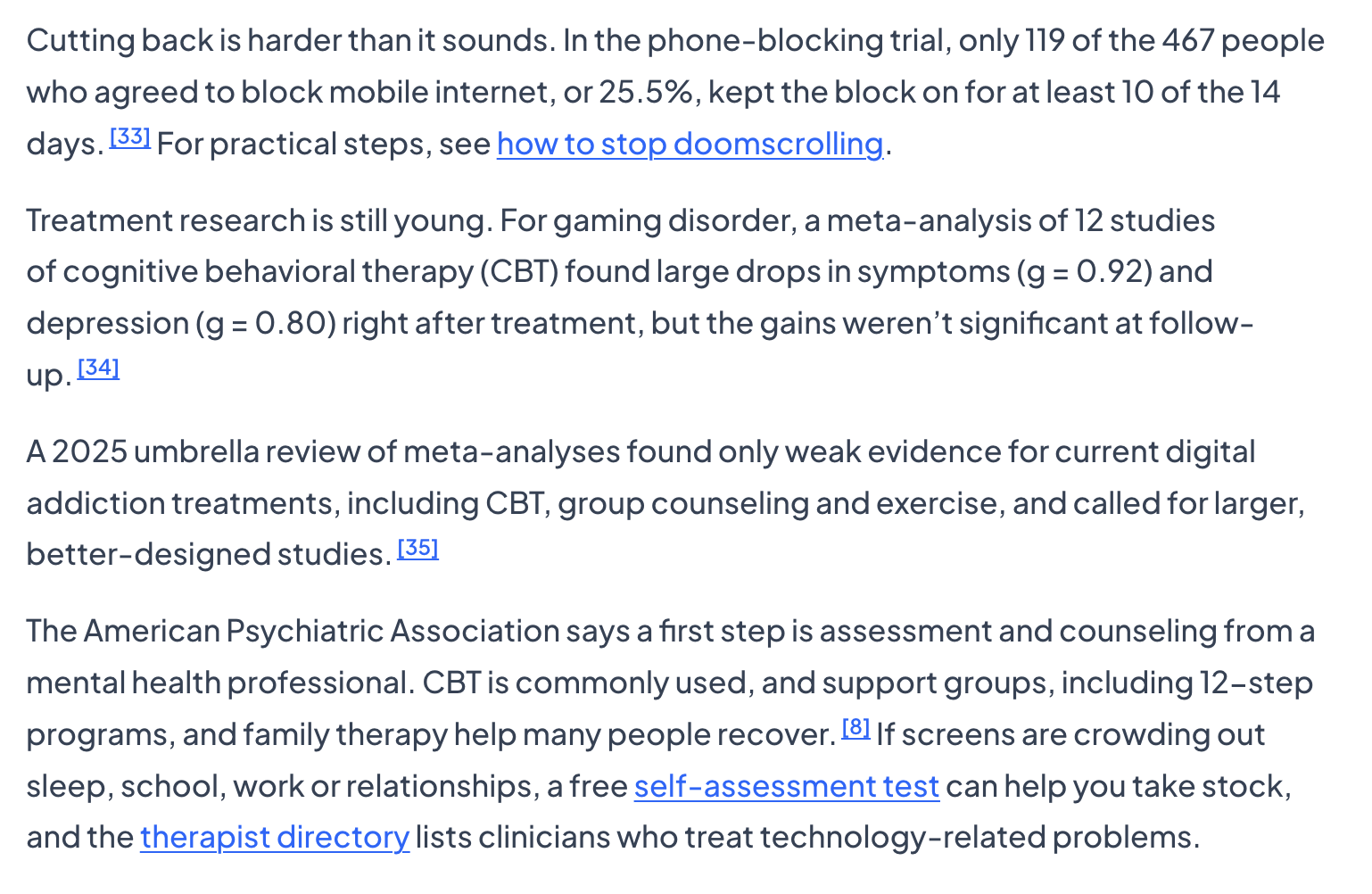
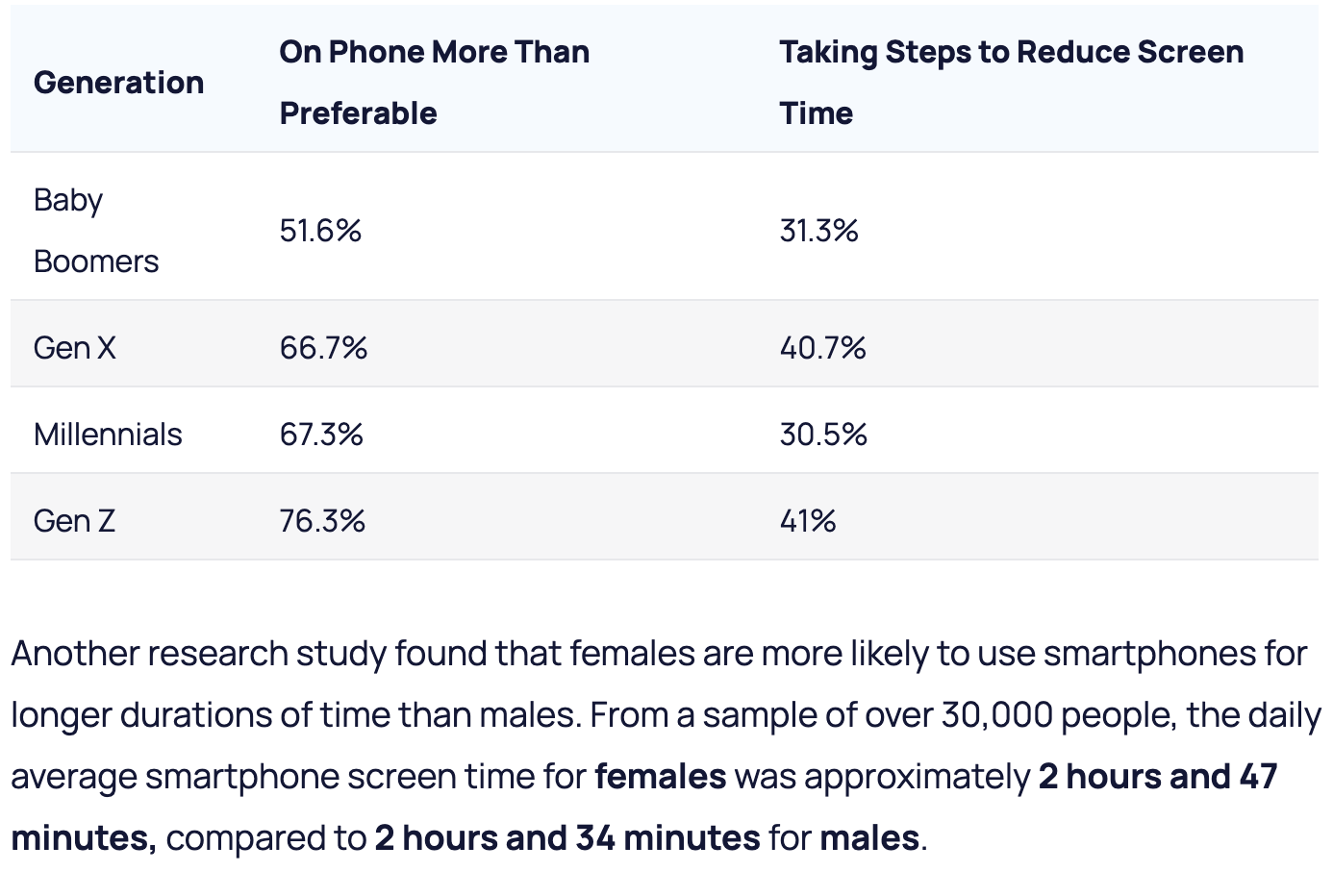
2026 Technology addiction statistics from The Center For Internet & Technology Addiction. This source includes self-reported data from different demographics that consider age, culture and gender. These statistics are helpful because they show who is affected by technology addiction and how it affects their lives. Age groups and their daily screen time. Cutting down on screen time, getting help and treatment. Plus the percentage of people that are trying to cut back their screen time. These are the effects of cutting back on screen time. While research is not as advanced, for gaming addiction, cutting back screentime resulted in drops in depression. How consumers base their spending decisions on their values and beliefs. For example, how more people are considering sustainability as a determining factor to buy from brands.
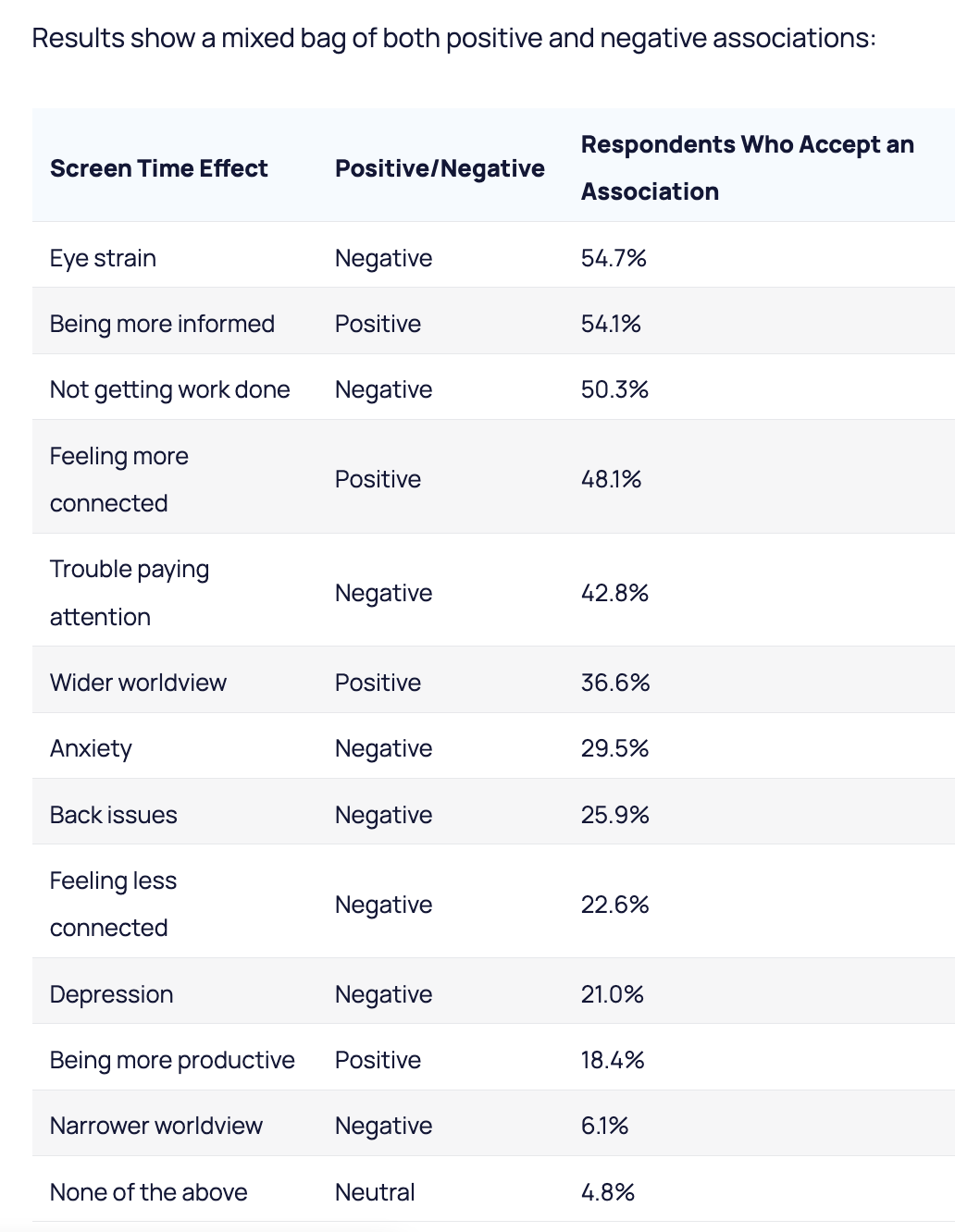
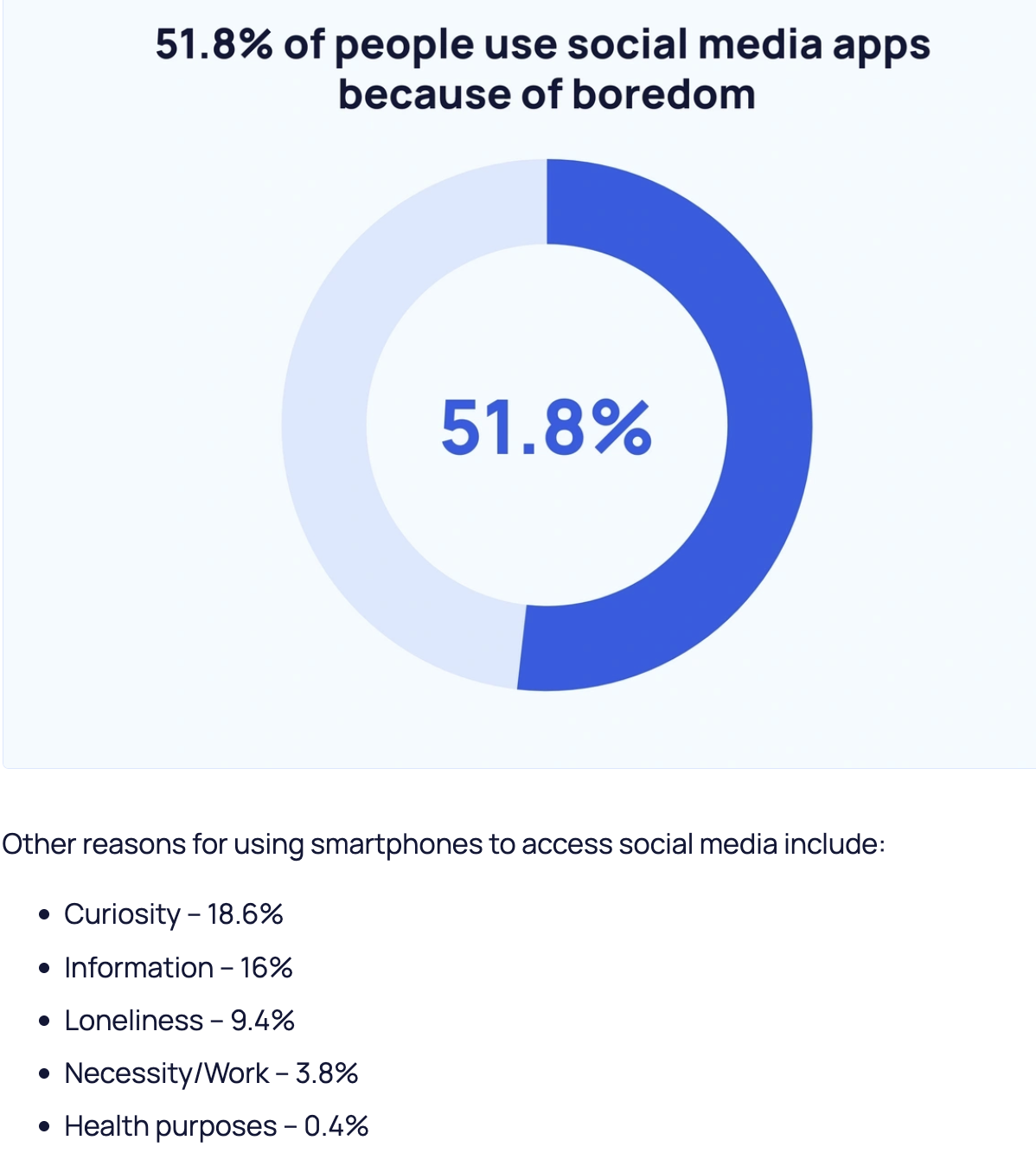
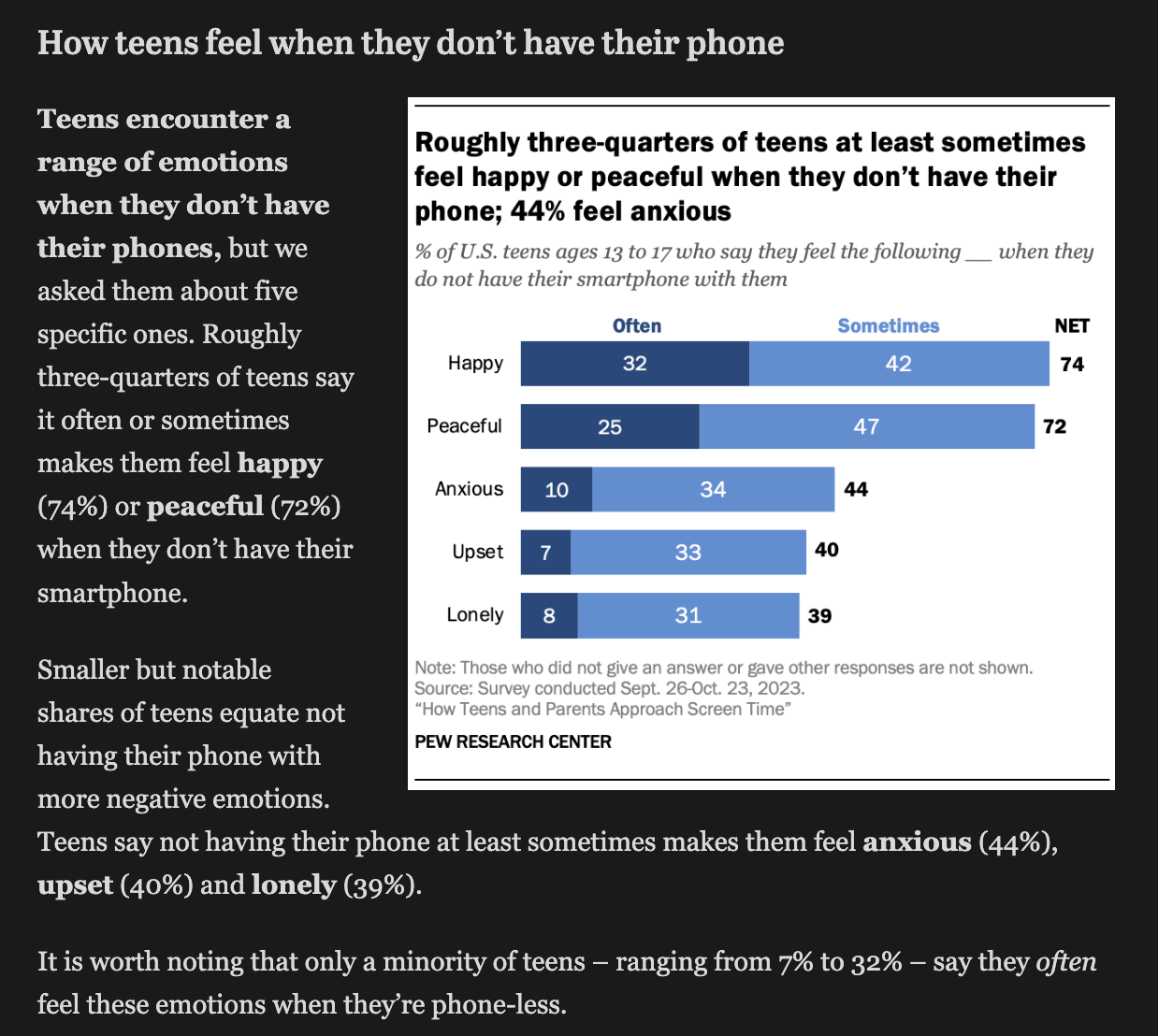
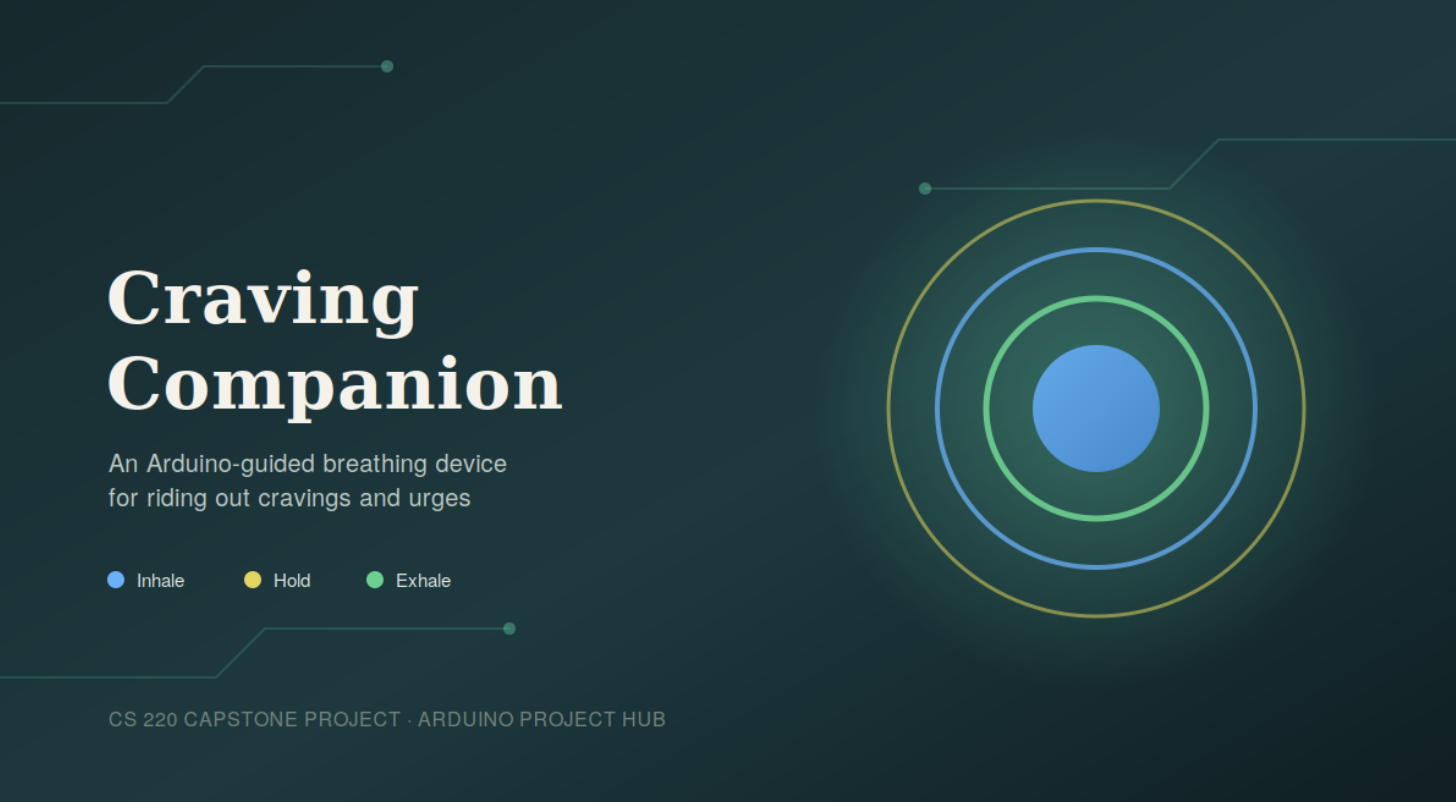
Results of effects of screen time on the body, whether they are positive or negative and the percentage of people who find an association between these symptoms and their screen usage. Reasons why people use social media apps range from boredom (most common cause) to health purposes (least common cause). Next are the demographics that admit they are on their phone more than they should and are actively trying to reduce their screentime. There is a difference between how many hours they actually spend on their phones versus their perception of their usage; they could use their phone for 2 hours a day and believe they are still using it too much even though the number falls below average. This image shows some of the emotions teens experience when they don't have their phones. The majority experience positive emotions like calm and happiness, the minority experience negative emotions like anxiety and loneliness This is a project from the arduino page, which helps guides you through paced breathing — inhale, hold, exhale — using color, sound, and an LCD countdown, so you have something real to do with your hands in the toughest first minute of a craving. Press a button. Breathe with the light. Let the craving pass.

HMI Research

How might I create a product or system that helps users manage their screen time more effectively? How might I create a product or system that helps users be more mindful of how much time they spend online?
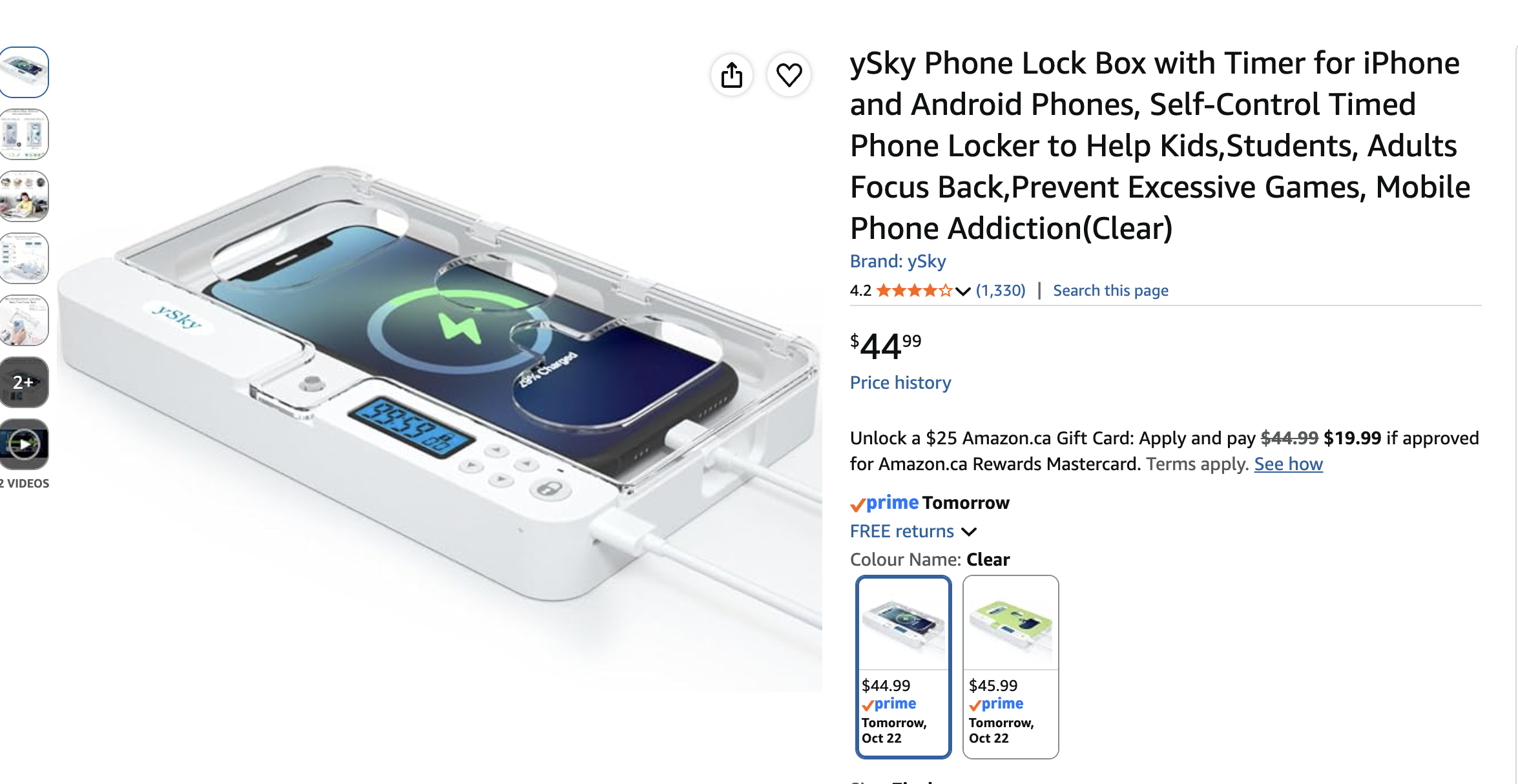
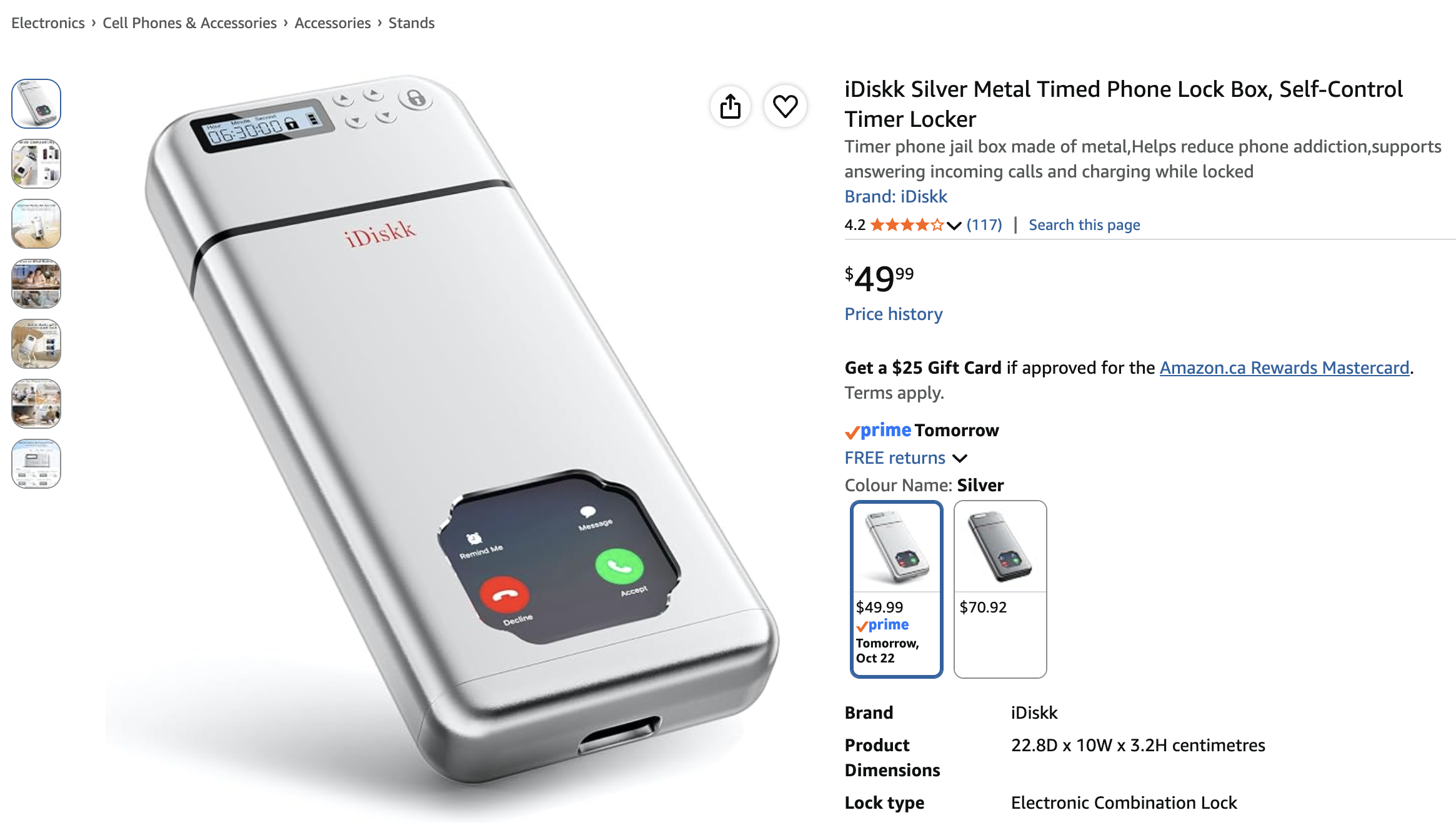
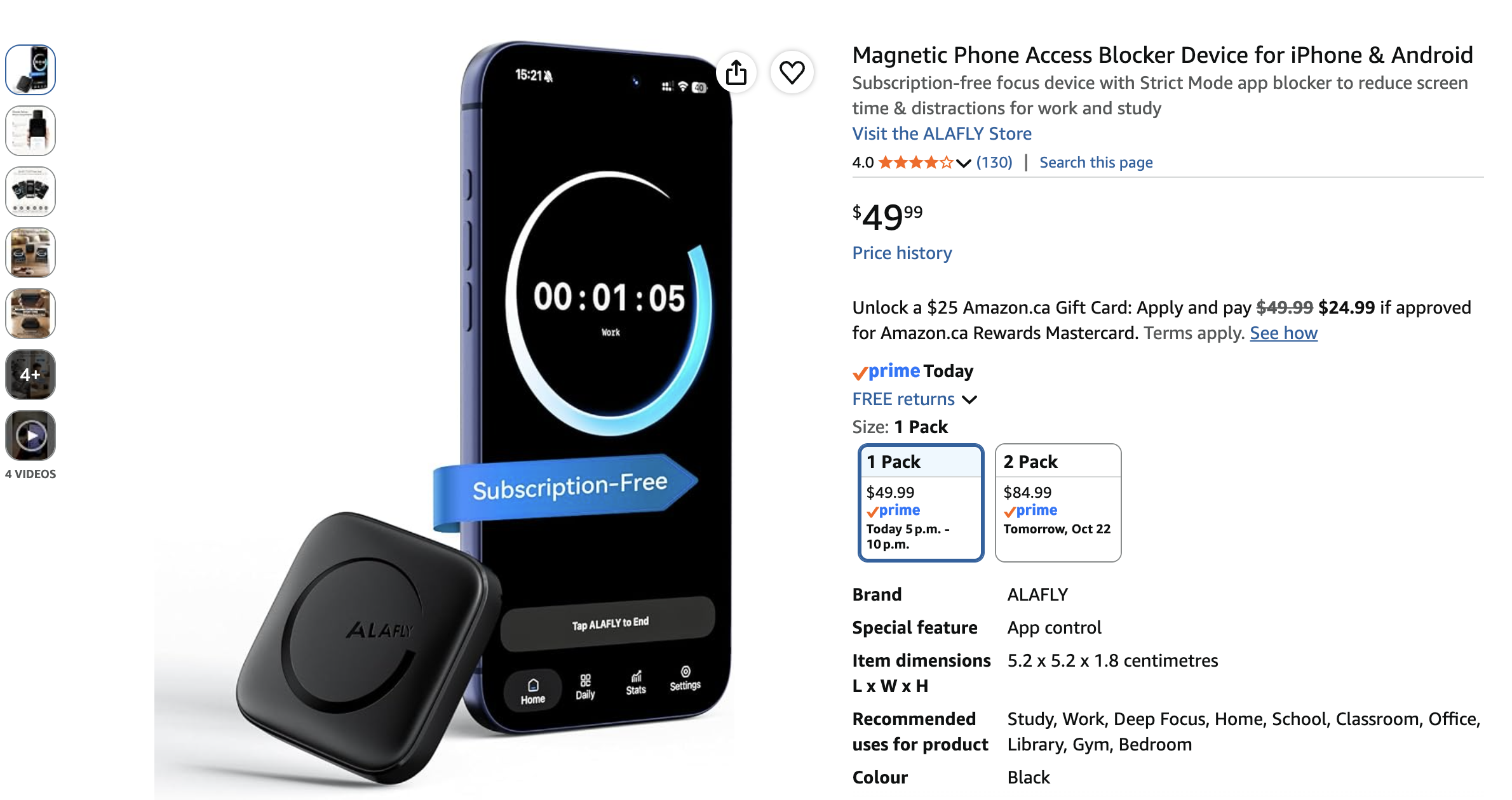
Physical gadget to reduce users' screentime by locking their phone in a box and setting a timer before it unlocks. This option has a small gap on top, where the screen goes, to allow users to answer calls. It would be good if notifications are also off so they do not pop on the screen and distract the user This option works the same way as the previous one, but it has a metal finish so you can not look at the screen at all. Brick: A small physical 2-inch square that pairs via Bluetooth; you have to physically tap your phone against it to lock or unlock restricted social media apps.

Project Path

Based on the market research, some project ideas that consider the HMI question: How might i create a product that helps users be more conscious and intentional about their phone use to identify their true needs and alternate ways to meet them?
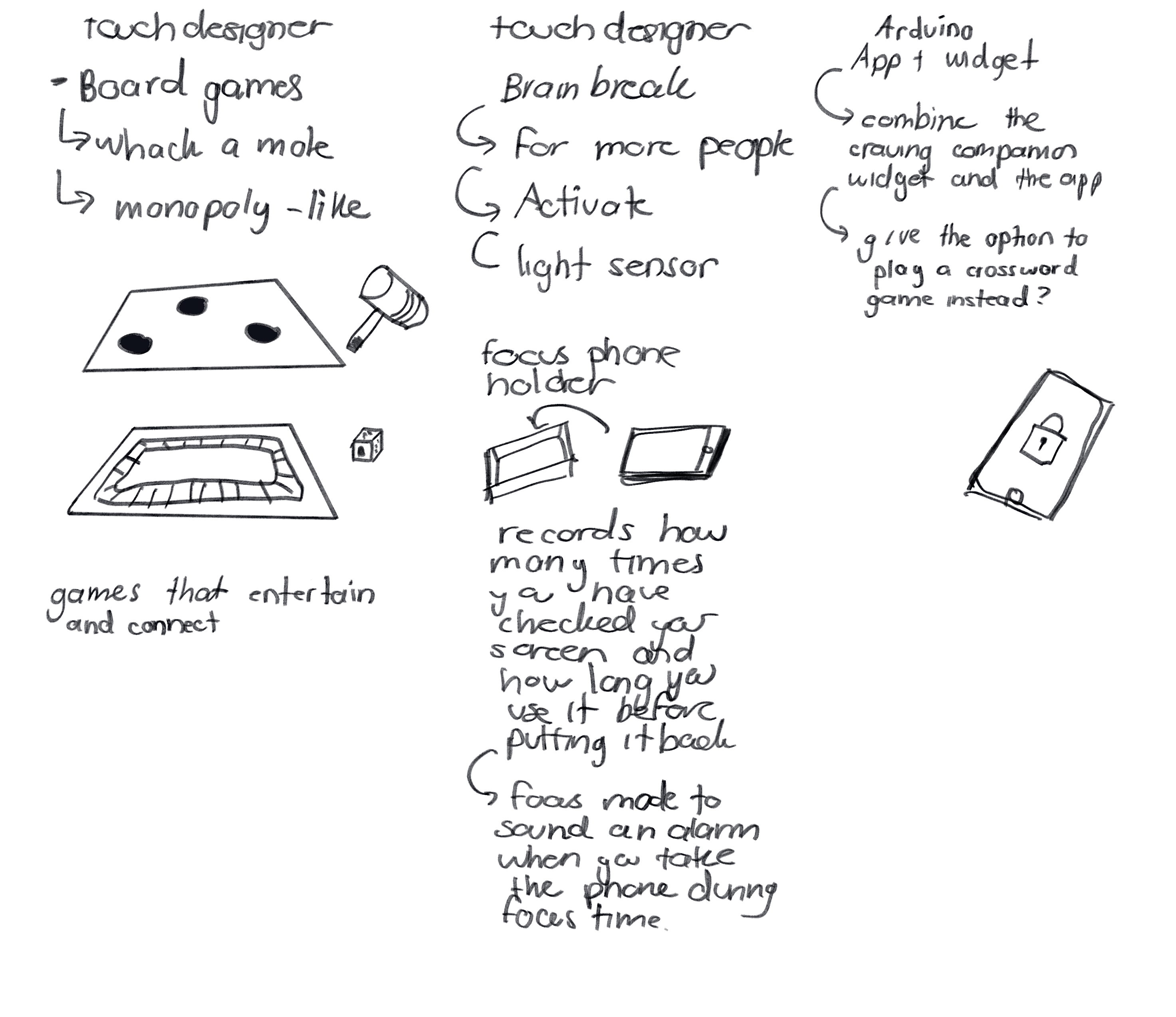
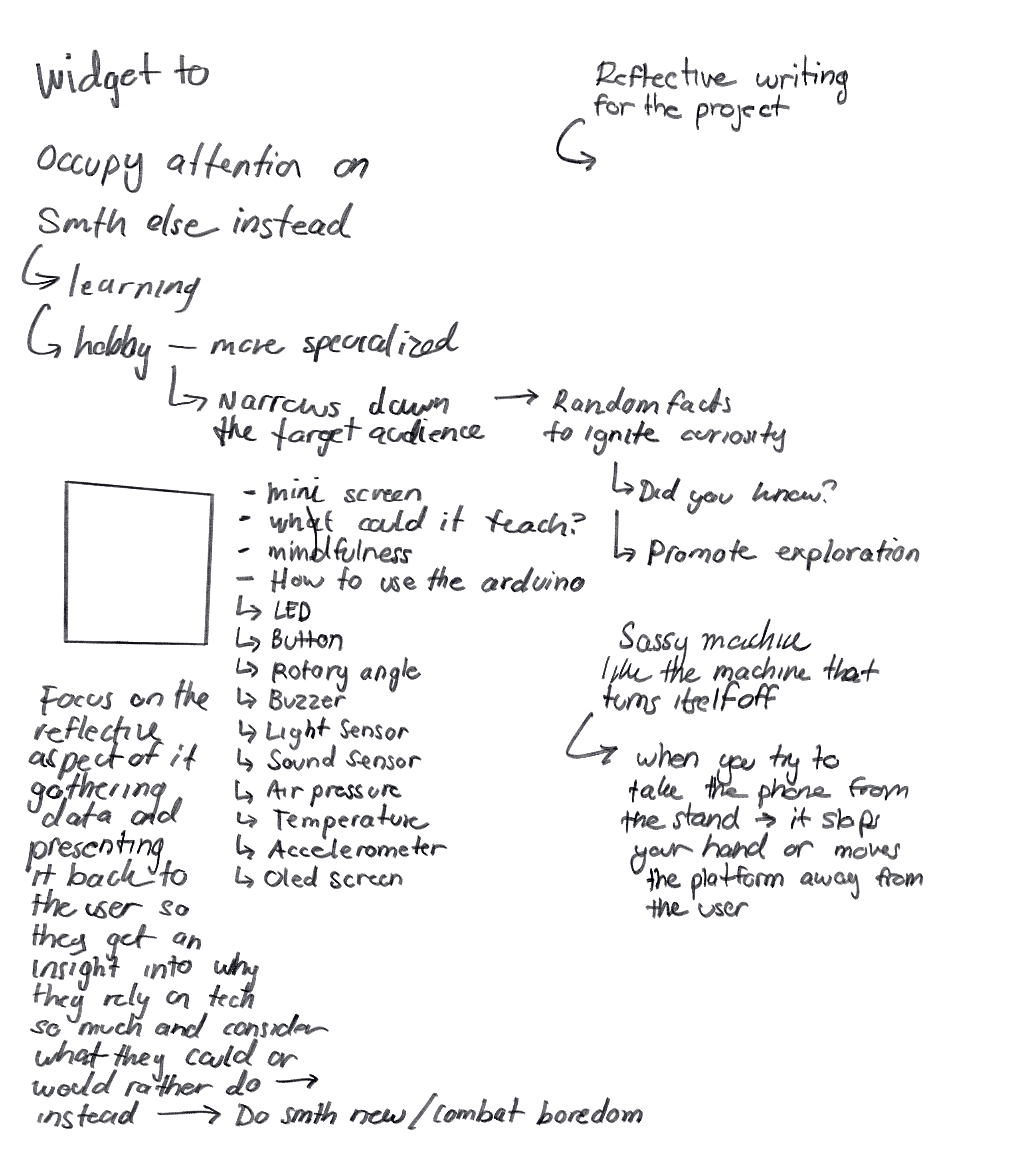
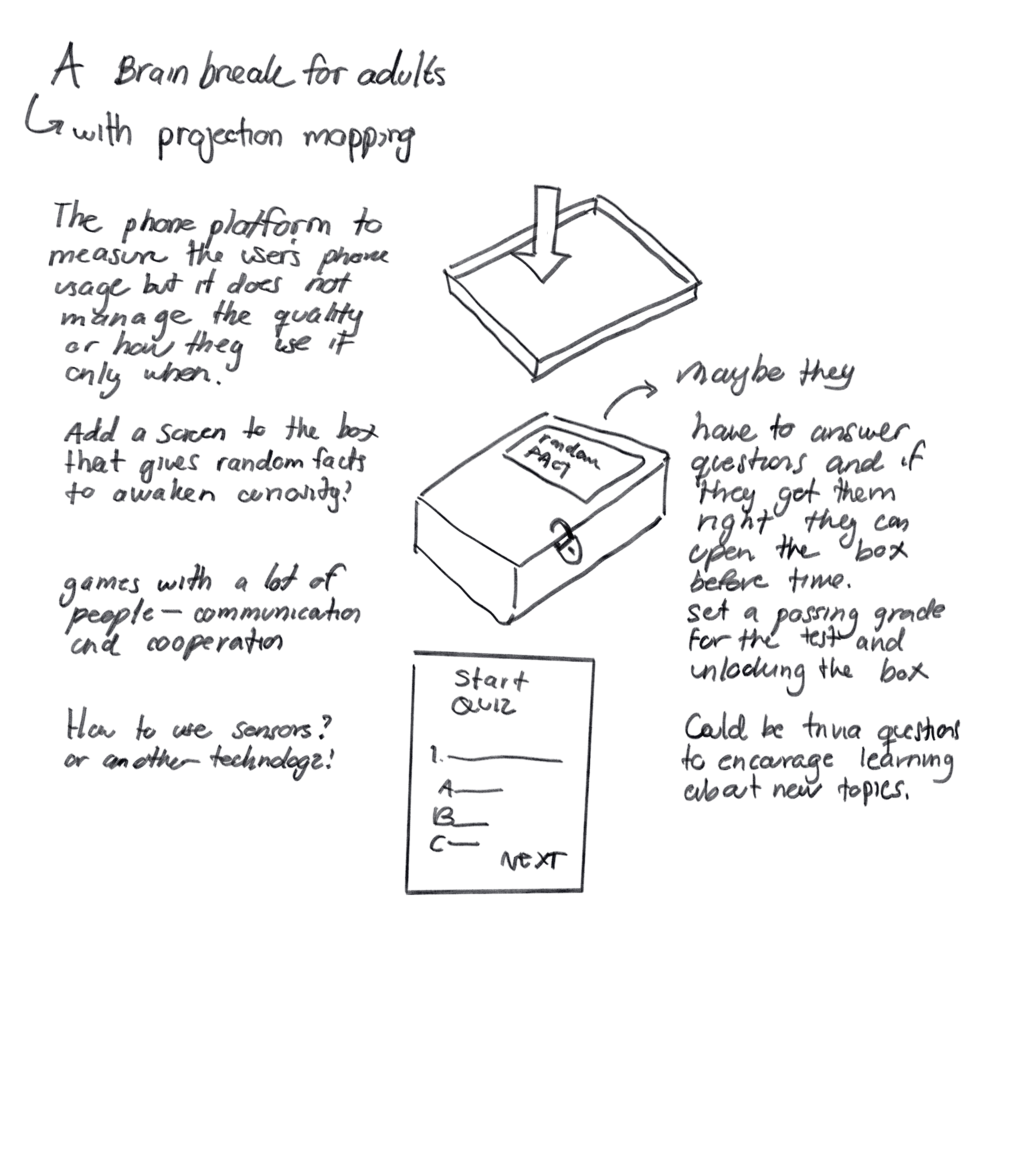
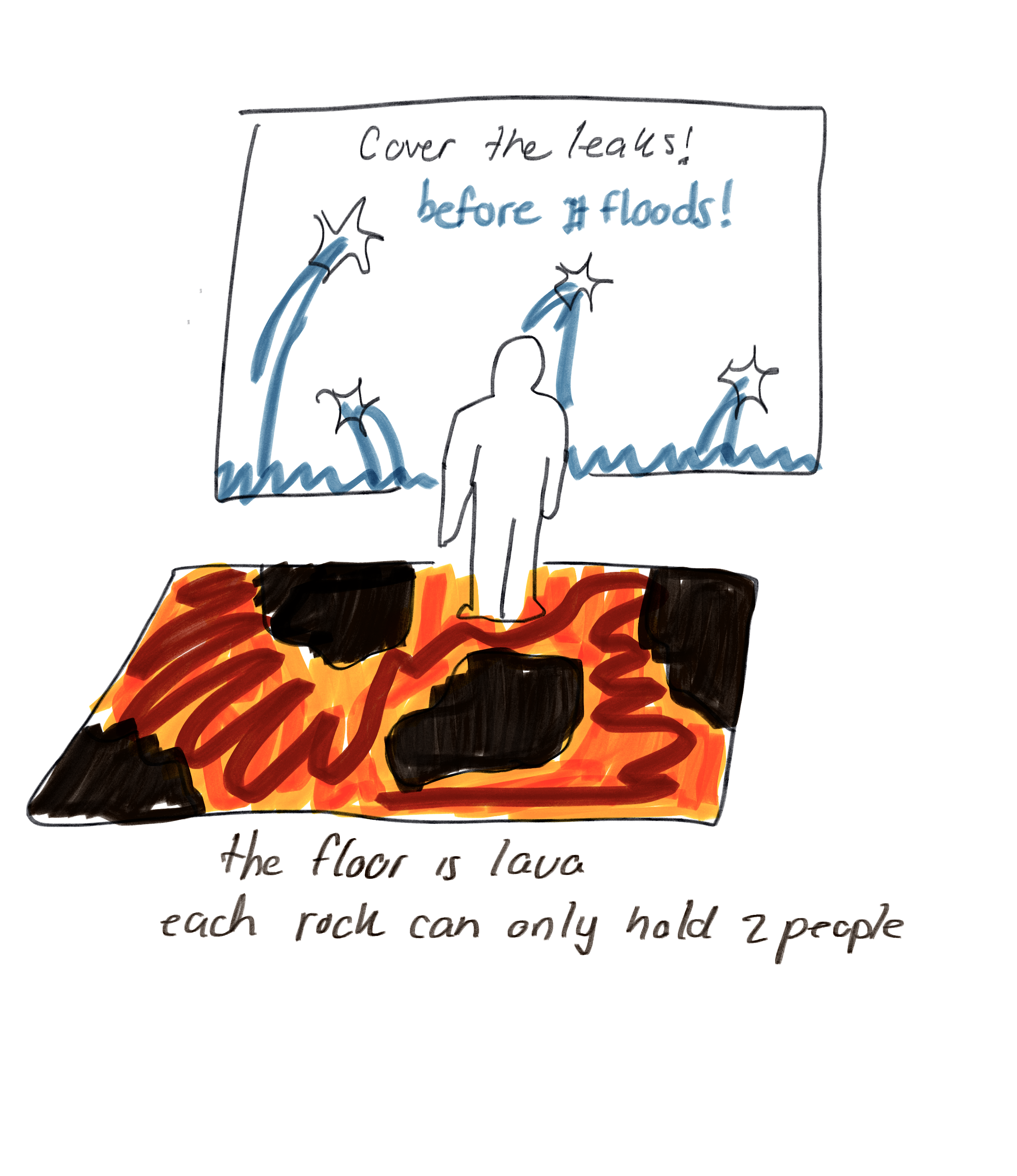
Recreate boardgames with Touch-Designer to promote other types of games. Another option is to create brain-break-like videos; this is a link to a brain break video for reference. The purpose of these videos is to promote physical activity to release energy and be able to focus on a task after. With projection mapping kids can interact with the obstacles and challenges in real life rather than through a TV. Sassy machine inspired by the Leave Me Alone Machine by Marvin Minsky, which is a box with a switch on the outside; when users try to turn it on, an arm pops out of the box and turn itself off and that is its whole purpose. The sassy machine would detect with an accelerometer if the user is trying to pick up their phone and slap their hand away. Improve on the phone-lock box and add test questions or trivia on the interface to force the user to learn or make them curious about a topic. The user can either wait until the time is up to open the box or have a perfect score on the test to be able to open the box before the timer is up. Recreate boardgames with Touch-Designer to promote other types of games. Another option is to create brain-break-like videos; this is a link to a brain break video for reference. The purpose of these videos is to promote physical activity to release energy and be able to focus on a task after. With projection mapping kids can interact with the obstacles and challenges in real life rather than through a TV.

Project 1 Concept


Project 1 Concept

The project that most interests me is the brain-break projection.

This is the concept that interests me the most because I want to use Touch Designer the most. Also, there are plenty of other resources to limit screen time to stop phone addiction.
×

Powered by w3.css